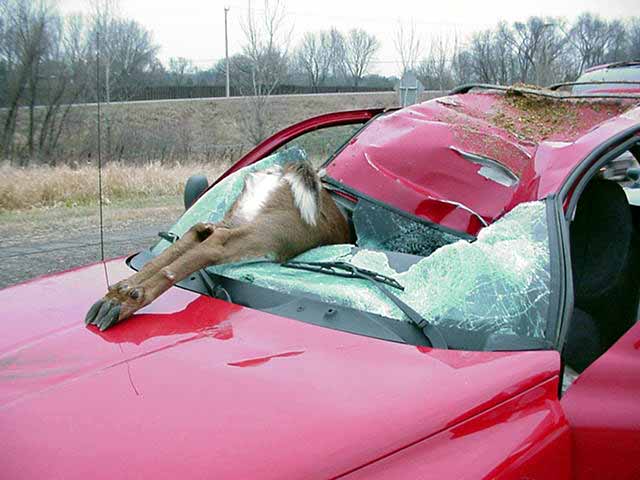
Do you really believe you are an animal? We are now taught this in school. It is a wonderful piece of information: I have been enjoying it all my life and I come back to it over and over again, as something to investigate and test. I grew up on a small farm with cows and chickens, and with a second-growth forest right at the back fence, so I had the good fortune of seeing the human and animal as in the same realm. But many people who have been hearing this since childhood have not absorbed the implications of it, perhaps feel remote from the nonhuman world, are not sure they are animals. They would like to feel they might be something better than animals. That’s understandable: other animals might feel they are something different than “just animals” too. But we must contemplate the shared ground of our common biological being before emphasizing the differences.
(Gary Snyder, The Practice of the Wild [San Francisco: North Point Press, 1990], 15-6 [italics in original])
09 November 2004


08 November 2004
Lawrence Finsen and Susan Finsen on Peter Singer
Peter Singer’s Animal Liberation has had a profound influence; many activists refer to this book as a turning point in their thinking about animals and in their lives generally. It is largely as a result of Singer’s pioneering work, together with that of Tom Regan, that questions about the treatment of animals have become a serious topic of discussion today, within both moral philosophy and American society. Of course others have raised serious questions about our relations with animals, especially in the English tradition (Singer, though Australian, did his graduate work at Oxford University, where he was influenced by others to take up issues concerning animals), but the contemporary scene is much more profoundly influenced by Singer than by his predecessors. Perhaps the influence of Animal Liberation is to be traced to Singer’s success in bringing philosophical argument about the moral status of animals to bear in a straightforward way on factual information about the treatment of animals in modern farms and laboratories. When juxtaposed with a hard look at self-interested human bias, the facts (of which most people remained happily ignorant) lead to some startling questions and conclusions about our cherished institutions and personal habits.
(Lawrence Finsen and Susan Finsen, The Animal Rights Movement in America: From Compassion to Respect [New York: Twayne Publishers, 1994], 179-80 [endnote omitted])
(Lawrence Finsen and Susan Finsen, The Animal Rights Movement in America: From Compassion to Respect [New York: Twayne Publishers, 1994], 179-80 [endnote omitted])
05 November 2004
04 November 2004
02 November 2004
From the Mailbag
Professor,
You are a skilled writer and philosopher. I enjoyed reading your work on TCS and your blog site. However, the post on 11/1/04 about eating meat [see here] is extremely overstated. I don't have the time to write a detailed reason for my opinion. I will say this: It didn't pass the "giggle test." You lost me as a reader.
"In my opinion, the most pressing moral issue in the world today, with the possible exception of defending Western civilization from its Islamic enemies, is the treatment of nonhuman animals by humans."
Do you really believe this?
Dr. Matt T. Smith
Note from kbj: Yes.
You are a skilled writer and philosopher. I enjoyed reading your work on TCS and your blog site. However, the post on 11/1/04 about eating meat [see here] is extremely overstated. I don't have the time to write a detailed reason for my opinion. I will say this: It didn't pass the "giggle test." You lost me as a reader.
"In my opinion, the most pressing moral issue in the world today, with the possible exception of defending Western civilization from its Islamic enemies, is the treatment of nonhuman animals by humans."
Do you really believe this?
Dr. Matt T. Smith
Note from kbj: Yes.
01 November 2004
TAILS
In my opinion, the most pressing moral issue in the world today, with the possible exception of defending Western civilization from its Islamic enemies, is the treatment of nonhuman animals by humans. Humans don't need to harm animals in order to survive and flourish. If you eat meat, especially meat produced on factory farms, you are making animals suffer and die solely because you like the taste of their flesh. Why would you do such a thing? I'm sure you don't think of yourself as a moral monster, but your actions are indefensible. Please stop. Please at least issue a personal moratorium on meat-eating until you think things through. There is no reason humans can't live together peacefully with all other animals. See here for an example of people who make a difference, day in and day out, to the cats, dogs, and other animals who live around and with them. I'm sure they would appreciate any donation you can make.
27 October 2004
26 October 2004
Peaceful Prairie Sanctuary
If you're a compassionate person, see here. Shouldn't the choices you make in life, including your dietary choices, reflect your values and express your character? If animals don't matter to you, why don't they? Do they suffer any less? Are their lives of less value? Do they have less of a desire to live? Don't just live out the life you were given by your parents. Reflect on your life and the choices you make. Become the person you want to be.
By the way, the Peaceful Prairie Sanctuary has a beautiful and useful newsletter to which you can subscribe. It is sent by e-mail. Please write to the site administrator to be put on the mailing list. Tell them AnalPhilosopher sent you.
By the way, the Peaceful Prairie Sanctuary has a beautiful and useful newsletter to which you can subscribe. It is sent by e-mail. Please write to the site administrator to be put on the mailing list. Tell them AnalPhilosopher sent you.
24 October 2004
From the Mailbag
Dear Keith,
Officials at the University of Illinois claim that there is a deer overpopulation at U of I's Allerton Park. They have proposed to remedy the situation with a bow hunt. [See here and here.] Rest assured that the people participating in this bow hunt will not be Olympic archers. They will be recreational hunters of varying abilities where archery is concerned. That means many animals will be shot in non-vital parts of their bodies. Some of the wounded animals will no doubt escape into the woods where they will die slow lingering deaths. Some of the other wounded animals, those too severely wounded to flee, will be shot again and perhaps several times before being brought down. Such a way of dealing with deer population problems is cruel and inhumane, especially when there are much more humane alternatives available. Some of the animals could be relocated, a more costly, but much more humane alternative. If the overpopulation problem is so severe that some of the animals must be murdered (there is no other term for it), then it should be done by professional marksmen who work for the forest service. These marksmen are able to kill the animals instantaneously—a fatal end for an innocent animal but at least it minimizes the animal's suffering.
Remember, the University of Illinois is a PUBLIC institution. It is funded with tax dollars, and not just tax dollars from people in the state of Illinois. Much of the research conducted at the University of Illinois is funded by federal research dollars which come from all taxpayers in America. If you don't think that a publicly funded institution of higher learning should be sponsoring a seven-week long deer bow hunt, please take a moment to write/email and call the people listed below. Also, please consider posting this information on your blog. Your readers' tax dollars fund research at U of I, and many of your readers might be opposed to such an inhumane way of dealing with an alleged deer-overpopulation problem. If U of I gets enough bad press on this matter and if enough people write David Schejbal, Associate Vice Chancellor at U of I, and the U of I Office of Public Affairs at the addresses below [schejbal@ad.uiuc.edu and r-kaler@ad.uiuc.edu, respectively], the officials at the U of I might cancel the hunt. Together, we might be able to prevent the senseless killing of these innocent animals. Thanks for you help.
Best,
Mylan Engel
Officials at the University of Illinois claim that there is a deer overpopulation at U of I's Allerton Park. They have proposed to remedy the situation with a bow hunt. [See here and here.] Rest assured that the people participating in this bow hunt will not be Olympic archers. They will be recreational hunters of varying abilities where archery is concerned. That means many animals will be shot in non-vital parts of their bodies. Some of the wounded animals will no doubt escape into the woods where they will die slow lingering deaths. Some of the other wounded animals, those too severely wounded to flee, will be shot again and perhaps several times before being brought down. Such a way of dealing with deer population problems is cruel and inhumane, especially when there are much more humane alternatives available. Some of the animals could be relocated, a more costly, but much more humane alternative. If the overpopulation problem is so severe that some of the animals must be murdered (there is no other term for it), then it should be done by professional marksmen who work for the forest service. These marksmen are able to kill the animals instantaneously—a fatal end for an innocent animal but at least it minimizes the animal's suffering.
Remember, the University of Illinois is a PUBLIC institution. It is funded with tax dollars, and not just tax dollars from people in the state of Illinois. Much of the research conducted at the University of Illinois is funded by federal research dollars which come from all taxpayers in America. If you don't think that a publicly funded institution of higher learning should be sponsoring a seven-week long deer bow hunt, please take a moment to write/email and call the people listed below. Also, please consider posting this information on your blog. Your readers' tax dollars fund research at U of I, and many of your readers might be opposed to such an inhumane way of dealing with an alleged deer-overpopulation problem. If U of I gets enough bad press on this matter and if enough people write David Schejbal, Associate Vice Chancellor at U of I, and the U of I Office of Public Affairs at the addresses below [schejbal@ad.uiuc.edu and r-kaler@ad.uiuc.edu, respectively], the officials at the U of I might cancel the hunt. Together, we might be able to prevent the senseless killing of these innocent animals. Thanks for you help.
Best,
Mylan Engel
21 October 2004
Sickos with Guns?
Here is an essay about the mental health of hunters. (Thanks to Dan Gifford for the link.)
20 October 2004
Twenty Years Ago
10-20-84 . . . There was an animal-rights march this morning near the university, but I decided to remain at home instead of participating. Don’t get me wrong. I oppose vivisection (experimentation on live animals) as much as anyone, but as a rational person, I recognize that demonstrations tend to be ineffectual. Sometimes, they alienate more people than they persuade. I feel that I can contribute more to the cause of animal rights by writing and lecturing on the subject than by carrying a sign and getting my picture on the evening news. I respect the demonstrators, but I decide to protest in other ways. Incidentally, I saw pictures of Lori Gruen, a fellow graduate student, on the news this evening. She was sitting by a small casket with the name “Lucky” on it in one scene, and was walking down the street with other protesters in another. Finally, I saw her being carried away by police after having been arrested for trespassing on university property. Go get ’em, Lori! You have demonstrated your commitment to the cause by paying a very personal price: arrest. Peter Singer, whose book (Animal Liberation) you carried, would have been proud.
Kosher Killing
One of my readers took my advice and read Mylan Engel's essay "The Immorality of Eating Meat," a link to which appears on the left. The reader said that kosher killing is morally superior to other sorts of killing. I forwarded the reader's letter to Mylan, who responded this morning as follows:
Dear Keith:Please read Mylan's essay.
One of your readers, J. Wetstein PE, insists that my claims about "kosher slaughter" are inaccurate. S/he goes on to claim that you won't find a more humane treatment of animals for meat production than with kosher standards, but s/he offers no evidence in support of this claim. It sounds like a religious conviction rather than a well-founded, evidence-based empirical claim. So, let's look at the facts. According to "Kashrut" (Jewish dietary laws), the animal must be fully conscious when slaughtered. The method of slaughter is a quick, deep stroke across the throat with a perfectly sharp blade with no nicks or unevenness. This method is supposedly painless and is supposed to cause unconsciousness within two seconds and is therefore thought to be the most humane method of slaughter.
In theory, that may be correct, but in practice, kosher slaughter, at least in the U.S., makes for a horrific death for the animals so slaughtered. Moreover, even if kosher slaughter were more humane than other forms of slaughter, that would have no impact on the handling and transportation of the animals on their way to the slaughterhouse. These animals are prodded with electric cattle prods and beaten with metal poles to drive them onto the trucks. They are then shipped long distances without food or water and without adequate protection from the elements. In winter, some animals literally freeze to the sides of these trucks. When they arrive at the slaughterhouse, they are again prodded with electric prods and metal pipes to force them up the shoot to the slaughterer who awaits them. None of this constitutes what I would call "humane treatment." But now let's turn to kosher slaughter as it is actually practiced in the U.S. John Robbins has aptly described how the implementation of kosher slaughter laws in the U.S. is actually a perversion of the original intent of those laws. I have linked to an excerpt from his book below. Once you read Robbins's accurate description (I have seen detailed video footage documenting everything Robbins claims), you'll see that there is no plausible way of viewing kosher slaughter, at least in the U.S., as a humane way of killing animals. Even Orthodox rabbis in Sweden are starting to acknowledge this fact and have come to allow animals to be stunned before killing. Not so here in the U.S. Read Robbins's account, and you'll see why kosher slaughter is not humane in practice.
Best, Mylan
p.s. I obtained this Robbins excerpt from meat.org's web site [www.meat.org] which contains a great deal of information about animal slaughter, including some streaming video of pig and chicken slaughter. After viewing this footage, your readers can decide for themselves whether the slaughtering techniques used in the U.S. today are humane.
19 October 2004
Animal Rights
I'm a conservative. I'm also a proponent of animal rights. There is no entailment relation between the two, so far as I can discern. But there is no incompatibility, either, as some unthinking conservatives appear to believe (or want to believe). See here. (Thanks to John Andrews for the link.)
17 October 2004
On the Road with Mylan
My friend Mylan Engel Jr recently lectured on animal ethics at Ball State University in Muncie, Indiana. Here is the story about his lecture. If you haven't read Mylan's essay "The Immorality of Eating Meat," please do. There's a link on the left side of this blog. I've read much of the literature on animal ethics over a period of 25 years, and this is the best essay I've read. Caveat: If you read it, you will either abstain from animal flesh or suffer from cognitive dissonance!
Addendum: Here is another story about Mylan's lecture.
Addendum: Here is another story about Mylan's lecture.
16 October 2004
12 October 2004
From Today's New York Times
To the Editor:
Re "Cloning a Bad Idea," by Verlyn Klinkenborg (Editorial Notebook, Oct. 9):
As a scientist, I am impressed with the cloning of cats performed by Genetic Savings & Clone, but as a recently bereaved pet owner, I fail to see the purpose.
I recently had to make the difficult decision to euthanize a cat that had been my companion for more than 17 years. Still, I would not have considered cloning her. One of the biggest joys of sharing one's life with pets is learning the variety of their personalities.
Gremalkin, my surviving cat, may look like Nyssa, my first cat, but Nyssa was more of an affectionate lap cat, while Gremalkin still has the playfulness and impatience of a kitten.
It is these differences in personality that make pet ownership the rich experience it is.
James C. Armstrong Jr.
Foster City, Calif., Oct. 9, 2004
To the Editor:
I was sad to read Verlyn Klinkenborg's article about cloning cats (Editorial Observer, Oct. 9).
We have a real pet overpopulation crisis in this country, and someone with more money than sense is striving to add to it.
Millions of beautiful, lovable cats, dogs, puppies, kittens and other animals are euthanized every year because they have nobody to care for them.
The selfishness required to create a life when millions are thrown away is astounding.
Mary Chipman
St. Ann, Mo., Oct. 9, 2004
Re "Cloning a Bad Idea," by Verlyn Klinkenborg (Editorial Notebook, Oct. 9):
As a scientist, I am impressed with the cloning of cats performed by Genetic Savings & Clone, but as a recently bereaved pet owner, I fail to see the purpose.
I recently had to make the difficult decision to euthanize a cat that had been my companion for more than 17 years. Still, I would not have considered cloning her. One of the biggest joys of sharing one's life with pets is learning the variety of their personalities.
Gremalkin, my surviving cat, may look like Nyssa, my first cat, but Nyssa was more of an affectionate lap cat, while Gremalkin still has the playfulness and impatience of a kitten.
It is these differences in personality that make pet ownership the rich experience it is.
James C. Armstrong Jr.
Foster City, Calif., Oct. 9, 2004
To the Editor:
I was sad to read Verlyn Klinkenborg's article about cloning cats (Editorial Observer, Oct. 9).
We have a real pet overpopulation crisis in this country, and someone with more money than sense is striving to add to it.
Millions of beautiful, lovable cats, dogs, puppies, kittens and other animals are euthanized every year because they have nobody to care for them.
The selfishness required to create a life when millions are thrown away is astounding.
Mary Chipman
St. Ann, Mo., Oct. 9, 2004
10 October 2004
From Today's New York Times
To the Editor:
If the residents of Ville Platte, La. ("If Town Clears Out, It Must Be Squirrel Season," front page, Oct. 3), stopped shooting squirrels long enough to observe them, they would see that squirrels are creatures with complex lives of their own.
We have squirrels at our house and have witnessed a mother squirrel raising her young. She teaches them to climb slippery trees and steep rooftops. If she senses danger, she will carry her young to safety.
She spends lots of time hunting and gathering food and soft things with which to feather their winter nest.
It is sad to read of cruel behavior toward these small and beautiful creatures, which are merely struggling to survive, as we all are.
Joanna Lake
East Burke, Vt., Oct. 4, 2004
To the Editor:
Try as we may to respect cultural differences, it boggles the mind that anyone could gain pleasure out of taking the lives of animals "for the fun of it." Where are the values of compassion and stewardship for the world in which we live?
Cultures far wiser than ours respect the gift of life in all its forms. It is slight comfort that these miniature atrocities are isolated in remote pockets of our country where the light of human understanding has yet to dawn.
Linda Holt
Trenton, Oct. 4, 2004
If the residents of Ville Platte, La. ("If Town Clears Out, It Must Be Squirrel Season," front page, Oct. 3), stopped shooting squirrels long enough to observe them, they would see that squirrels are creatures with complex lives of their own.
We have squirrels at our house and have witnessed a mother squirrel raising her young. She teaches them to climb slippery trees and steep rooftops. If she senses danger, she will carry her young to safety.
She spends lots of time hunting and gathering food and soft things with which to feather their winter nest.
It is sad to read of cruel behavior toward these small and beautiful creatures, which are merely struggling to survive, as we all are.
Joanna Lake
East Burke, Vt., Oct. 4, 2004
To the Editor:
Try as we may to respect cultural differences, it boggles the mind that anyone could gain pleasure out of taking the lives of animals "for the fun of it." Where are the values of compassion and stewardship for the world in which we live?
Cultures far wiser than ours respect the gift of life in all its forms. It is slight comfort that these miniature atrocities are isolated in remote pockets of our country where the light of human understanding has yet to dawn.
Linda Holt
Trenton, Oct. 4, 2004
05 October 2004
From the Mailbag
Hi AP,
I always find something to challenge my thoughts in your blog. And your ideas on being a carnivore are a particular challenge for me (talk about cognitive dissonance!).
But one thing I was pondering the other day (in the light of your eating-meat discussions) was your view on the wearing of leather. Since I only have a 56k dial-up connection, searching thru the archives was a vast chore. So I thought I'd just ask you to send me links if you've blogged on this topic. If not, I'd be interested to hear your thoughts.
Anyway, all the best! Don't let the rude people of this world get you down. :-)
Sincerely, gg2
PS: I've now got 2 e-mail addresses for you, not sure which is current so have sent to both.
-----
"Not all who wander are lost." —JRR Tolkein
I always find something to challenge my thoughts in your blog. And your ideas on being a carnivore are a particular challenge for me (talk about cognitive dissonance!).
But one thing I was pondering the other day (in the light of your eating-meat discussions) was your view on the wearing of leather. Since I only have a 56k dial-up connection, searching thru the archives was a vast chore. So I thought I'd just ask you to send me links if you've blogged on this topic. If not, I'd be interested to hear your thoughts.
Anyway, all the best! Don't let the rude people of this world get you down. :-)
Sincerely, gg2
PS: I've now got 2 e-mail addresses for you, not sure which is current so have sent to both.
-----
"Not all who wander are lost." —JRR Tolkein
28 September 2004
From the Mailbag
Keith,
Here is a photo gallery of vegan cats and dogs. I was proud to add my Boxers, Louie and Savannah, earlier today.
Joanna Lucas
Here is a photo gallery of vegan cats and dogs. I was proud to add my Boxers, Louie and Savannah, earlier today.
Joanna Lucas
24 September 2004
From the Mailbag
Keith,
I haven't seen the replies you have received to your "Confusions and Fallacies About Animals, Part 19" blog entry [see here], but I'm not sure whether your respondents intend to be arguing as follows:
I think the mistake in the above argument lies in premise 3. It does not follow that a life that is "impoverished" in the sense stipulated in 3, is really an impoverished life in any meaningful sense. It would only be an impoverished life in a meaningful sense if there were no other pleasures comparable to the pleasures of eating meat and animal products that you could provide for your dogs. But there are lots of vegetarian foods that dogs love. Dogs go wild over certain veggie dog biscuits. With a little effort, you could provide your dogs with vegetarian foods that they would love. In some cases, you might have to cook some of these foods yourself. But they would love to eat these foods. By feeding them meat and animal products, you are "depriving" them of these alternative pleasures. Are they lives "impoverished" as a result of not getting these alternative vegetarian pleasures?
I suspect that if your readers explicitly formulated the above argument, your response would be something like this: YOUR life would not be impoverished if you refrained from eating meat, because you could get just as much pleasure (if not more pleasure) out of eating delicious vegan dishes instead. Many of these dishes (e.g. vegan Boca Burgers or Tofurkey sandwich slices) are even more convenient than their meat-based counterparts. While it's true that you won't be getting the pleasures of eating meat if you refrain from meat and animal products, you will be getting other pleasures that are just as satisfying as those associated with eating meat. Hence, your life will not be impoverished after all. In the case of humans, there is also the argument that humans will live longer, healthier, more fulfilling lives free of debilitating diseases, if they refrain from eating meat and animal products.
Some studies suggest that the same is true for dogs. The low quality of many of the animal ingredients [e.g. chicken meal (consisting of processed blood, bones, feces, etc. scraped off the killing floor of the slaughter), beef tallow (the rendered fat of cattle which is almost tasteless when pure and is used primarily in making soap, glycerin, margarine, candles, and lubricants), etc. Just read the label.] together with preservatives like BHT, BHA, and ethoxyquin found in most commercial pet foods, even upscale pet foods, like Science Diet, are thought to increase the risk of certain diseases and cancers. You may be shortening your dogs' lives and increasing their risk of painful cancers, crippling arthritis, and other debilitating diseases by feeding these commercial meat-based pet foods. For that reason alone, it is at least worth checking out some vegetarian dog foods to see how your dogs take to them and to see if their coats improve and to see if they have more energy. Here is a link to a web page about vegetarian dogs. Here is a link to a web site where you can purchase some vegetarian dog foods, and doggie treats.
I suggest you let your dogs decide for themselves whether they like vegetarian dog foods. They might relish them.
Hope some of this is helpful information for your dogs. I also hope that my above reconstruction of your readers' thoughts may better explain why they thought that your reasons for feeding your dogs meat and animal products gave them a reason for eating meat themselves.
Best,
Mylan Engel
I haven't seen the replies you have received to your "Confusions and Fallacies About Animals, Part 19" blog entry [see here], but I'm not sure whether your respondents intend to be arguing as follows:
1. Keith feeds his dogs meat.Perhaps that's how they put it, but I suspect that what they meant to say was more like this:
Therefore,
2. It is o.k. for me to eat meat.
1. Keith admits (or should admit) that Shelbie and Sophie don't need to eat meat to survive or be healthy. [Dogs easily thrive on vegetarian diets.]Given your commitment to 3, I can see why some of your readers think that YOUR principles justify their eating meat.
2. Why does Keith feed his dogs meat and animal products, if they don't need them to be healthy?
3. Because their lives would be impoverished if they didn't consume meat and animal products (impoverished in the sense that they wouldn't have the pleasurable experiences, satisfactions, and enjoyments that they currently get from eating meat and animal products).
4. So, Keith must think that it is o.k. to eat meat and animal products whenever refraining from doing so would result in an impoverished life (impoverished in the sense of lacking those pleasurable experiences, satisfactions, and enjoyments that would be gotten from eating meat).
5. If I were to refrain from eating meat, my life would be impoverished in just this sense, i.e. I would no longer get the pleasurable experiences, satisfactions, and enjoyments that I currently get from eating meat.
6. Given the principle identified in 4 above, which Keith apparently endorses in 3, it must be o.k. for ME to eat meat (since my refraining from doing so would result in my living an impoverished life), at least according to Keith's principles.
I think the mistake in the above argument lies in premise 3. It does not follow that a life that is "impoverished" in the sense stipulated in 3, is really an impoverished life in any meaningful sense. It would only be an impoverished life in a meaningful sense if there were no other pleasures comparable to the pleasures of eating meat and animal products that you could provide for your dogs. But there are lots of vegetarian foods that dogs love. Dogs go wild over certain veggie dog biscuits. With a little effort, you could provide your dogs with vegetarian foods that they would love. In some cases, you might have to cook some of these foods yourself. But they would love to eat these foods. By feeding them meat and animal products, you are "depriving" them of these alternative pleasures. Are they lives "impoverished" as a result of not getting these alternative vegetarian pleasures?
I suspect that if your readers explicitly formulated the above argument, your response would be something like this: YOUR life would not be impoverished if you refrained from eating meat, because you could get just as much pleasure (if not more pleasure) out of eating delicious vegan dishes instead. Many of these dishes (e.g. vegan Boca Burgers or Tofurkey sandwich slices) are even more convenient than their meat-based counterparts. While it's true that you won't be getting the pleasures of eating meat if you refrain from meat and animal products, you will be getting other pleasures that are just as satisfying as those associated with eating meat. Hence, your life will not be impoverished after all. In the case of humans, there is also the argument that humans will live longer, healthier, more fulfilling lives free of debilitating diseases, if they refrain from eating meat and animal products.
Some studies suggest that the same is true for dogs. The low quality of many of the animal ingredients [e.g. chicken meal (consisting of processed blood, bones, feces, etc. scraped off the killing floor of the slaughter), beef tallow (the rendered fat of cattle which is almost tasteless when pure and is used primarily in making soap, glycerin, margarine, candles, and lubricants), etc. Just read the label.] together with preservatives like BHT, BHA, and ethoxyquin found in most commercial pet foods, even upscale pet foods, like Science Diet, are thought to increase the risk of certain diseases and cancers. You may be shortening your dogs' lives and increasing their risk of painful cancers, crippling arthritis, and other debilitating diseases by feeding these commercial meat-based pet foods. For that reason alone, it is at least worth checking out some vegetarian dog foods to see how your dogs take to them and to see if their coats improve and to see if they have more energy. Here is a link to a web page about vegetarian dogs. Here is a link to a web site where you can purchase some vegetarian dog foods, and doggie treats.
I suggest you let your dogs decide for themselves whether they like vegetarian dog foods. They might relish them.
Hope some of this is helpful information for your dogs. I also hope that my above reconstruction of your readers' thoughts may better explain why they thought that your reasons for feeding your dogs meat and animal products gave them a reason for eating meat themselves.
Best,
Mylan Engel
23 September 2004
From the Mailbag
Hi Keith,
Thought you might be interested in this article on the rise of Chronic Wasting Disease, a transmissible spongiform encephalopathy akin to bovine spongiform encephalopathy that is infecting increasing numbers of deer and elk throughout the U.S.
Mylan Engel
Thought you might be interested in this article on the rise of Chronic Wasting Disease, a transmissible spongiform encephalopathy akin to bovine spongiform encephalopathy that is infecting increasing numbers of deer and elk throughout the U.S.
Mylan Engel
22 September 2004
From the Mailbag
Keith,
I have read your interesting wrestle [see here] with the question if it is good for a vegetarian to feed your dogs meat-products.
You say that the meat in dogfood is a by-product of the meat industry for human consumption. You are right. But this doesn't implicate that since they will slaughter animals anyway, you might as well use the remainders. If you buy dogfood made of meat, you will finance an industry that slaughters animals for human consumption, an unethical venture in your and my eyes.
I think your argument that, because your dogs are carnivores you should not restrain them from meat products otherwise their happiness will be in danger, may be relevant. But if they can survive without meat you should restrain them from it. The great utilitarianist Jeremy Bentham wants the suffering in the world minimised. So if you want this too, you can take into account what kind of dogfood minimises this suffering in the world. If dogs really need meat to survive (I don't know), you should try to find the most animal friendly meat (ecological or road kills) for your dogs. Because in these cases you don't spend money to the intensive farming industry. You can weigh the suffering of pigs, cows, chicks against the happiness of your dogs. Happy meals for your dogs versus horrible lives and deaths of pigs, cows, chicks etc.
By the way, many people think that leather is a by-product of animals slaughtered for human meat consumption. It is not. Leather is one of the most expensive parts of an animal. The slaughtering industry cannot exist without the revenues of the leather business.
Cheers,
Danny Friedmann
Amsterdam
The Netherlands
I have read your interesting wrestle [see here] with the question if it is good for a vegetarian to feed your dogs meat-products.
You say that the meat in dogfood is a by-product of the meat industry for human consumption. You are right. But this doesn't implicate that since they will slaughter animals anyway, you might as well use the remainders. If you buy dogfood made of meat, you will finance an industry that slaughters animals for human consumption, an unethical venture in your and my eyes.
I think your argument that, because your dogs are carnivores you should not restrain them from meat products otherwise their happiness will be in danger, may be relevant. But if they can survive without meat you should restrain them from it. The great utilitarianist Jeremy Bentham wants the suffering in the world minimised. So if you want this too, you can take into account what kind of dogfood minimises this suffering in the world. If dogs really need meat to survive (I don't know), you should try to find the most animal friendly meat (ecological or road kills) for your dogs. Because in these cases you don't spend money to the intensive farming industry. You can weigh the suffering of pigs, cows, chicks against the happiness of your dogs. Happy meals for your dogs versus horrible lives and deaths of pigs, cows, chicks etc.
By the way, many people think that leather is a by-product of animals slaughtered for human meat consumption. It is not. Leather is one of the most expensive parts of an animal. The slaughtering industry cannot exist without the revenues of the leather business.
Cheers,
Danny Friedmann
Amsterdam
The Netherlands
21 September 2004
From the Mailbag
Prof. Burgess-Jackson,
First off, let me say that I am a vegetarian by upbringing, and subsequently by inertia; I am not an ethical vegetarian. [See here.]
My parents have a dog who they are raising vegetarian. He's doing okay. Compared to other dogs, I'd say he's skinny and small. He feels the urge to occasionally eat certain grasses (which have a high calcium content, a mineral he would otherwise get from gnawing on bones). He is fed lots of lentils and he loves cheese, which is where he gets his protein.
But when he plays around other dogs during feeding time, he might steal their meat. He might also occasionally hunt small lizards or rats around the house, and eat them. It is instinctive.
Dogs (and to a lesser extent, cats) can survive on a vegetarian diet. But it is unnatural. They get essential nutrients more easily from animal products, and it is difficult to give them a balanced vegetarian diet. Because it is unnatural, I wouldn't recommend doing so.
But given that the "rules" of domestication include getting fed what the master eats, I wouldn't say it poses a moral problem for you. The dogs will survive, and if necessary, as I mentioned above, fend for themselves. They have more highly developed instincts than humans do.
When I helped raise my brother's dog, we fed it meat-based dog-food. None of us had a problem with it. My brother and I are both vegetarians. The dog showed a strong preference for chicken-based food.
Regards,
Gopi Sundaram
First off, let me say that I am a vegetarian by upbringing, and subsequently by inertia; I am not an ethical vegetarian. [See here.]
My parents have a dog who they are raising vegetarian. He's doing okay. Compared to other dogs, I'd say he's skinny and small. He feels the urge to occasionally eat certain grasses (which have a high calcium content, a mineral he would otherwise get from gnawing on bones). He is fed lots of lentils and he loves cheese, which is where he gets his protein.
But when he plays around other dogs during feeding time, he might steal their meat. He might also occasionally hunt small lizards or rats around the house, and eat them. It is instinctive.
Dogs (and to a lesser extent, cats) can survive on a vegetarian diet. But it is unnatural. They get essential nutrients more easily from animal products, and it is difficult to give them a balanced vegetarian diet. Because it is unnatural, I wouldn't recommend doing so.
But given that the "rules" of domestication include getting fed what the master eats, I wouldn't say it poses a moral problem for you. The dogs will survive, and if necessary, as I mentioned above, fend for themselves. They have more highly developed instincts than humans do.
When I helped raise my brother's dog, we fed it meat-based dog-food. None of us had a problem with it. My brother and I are both vegetarians. The dog showed a strong preference for chicken-based food.
Regards,
Gopi Sundaram
Fallacy Update
I appreciate the letters I receive. It keeps me on my toes. Unfortunately, the letters I’ve received so far in response to Confusions and Fallacies About Animals, Part 19 have missed the point. Several of them appear to reason as follows:
My post, if you’ll reread it, was a solicitation for help. I want someone to help me reconcile—if possible—the proposition that it’s wrong to harm others with the proposition that it’s permissible to feed one’s dogs meat-based products. It’s a puzzle, folks, not an invitation to judge me! Some of you simply assumed, without analysis or argument, that the propositions can’t be reconciled. This shows that you have no philosophical aptitude. A philosopher should be able to make a case for any proposition. I’m an atheist, for example, but I can make a case for the existence of God. A damn good one, in fact. If you’re a theist, can you make a case for the nonexistence of God? If not, why not? Do you think that your belief is unassailable? Have you not probed and tested it?
Lawyers are expected to be able to represent anyone, even those whom they detest or whose actions are reprehensible. This is not a failing of lawyers; it’s a virtue. To say that there’s a better case for p than for its denial, non-p, is not to say that nothing can be said for non-p or that nothing can be said against p. It’s to look at both sides of the case, to seek out strengths and weaknesses. This is part of what it means to be rational. To understand one’s own position, one must be able to make a case for its denial. Something can be said in behalf of everything. Even Hitler had good qualities.
Nobody who wrote to me mentioned that I have an obligation to Sophie and Shelbie, which I clearly do. It isn’t a matter of my liking to eat meat and thinking that this fact justifies it. Some readers thought this is what I was arguing. It’s not even that my dogs like meat (or that meat makes them happy, as one reader put it). That misstates what I’m saying. Dogs have a strong, innate preference for a meat-based diet, just as they have a strong, innate preference to be free rather than confined. A dog can live a long life in a cage, but it will be horribly frustrated. A dog can live on a vegetarian diet, but it will be horribly frustrated. Arguably, my obligation to Sophie and Shelbie implies that I not frustrate their strong, innate preferences. This is a far cry from saying that I should (or may) do whatever makes them happy.
Nobody mentioned that we’re talking about by-products. A by-product of a process is an unintended but desired consequence of that process. The meat used in dog food is a by-product of a process that would exist even if the by-product were not used. Cows, pigs, chickens, and lambs are killed for their flesh—for humans. Undesired parts of their bodies are used for pet food. I believe that this fact is morally relevant, for, by purchasing dog food made from by-products, I am not increasing the demand for animal flesh and therefore not harming animals. In their eagerness to criticize me, nobody noticed this.
Why is everyone playing “Gotcha!”? Have I pissed so many people off with my posts about animals that, when I present them with a moral puzzle, all they can think to do is say, “Gotcha!”? It’s depressing. It shows me that some of my readers—perhaps many of them—have no philosophical aptitude, no patience with intellectual or moral puzzles, no desire to reconcile the apparently irreconcilable. Just be glad that you’re not taking one of my exams, for you would fail. I routinely ask my students to make a case for propositions that I know many of them reject.
By the way, I have never tried to impose my values on anyone. What I have tried to do—and this may be what pisses people off—is impose their values on them. I believe that if you examine your beliefs and values carefully, you will see that you are committed to vegetarianism. Read Mylan Engel’s essay “The Immorality of Eating Meat,” a link to which is on the left side of this blog. Don’t read the essay defensively, with a chip on your shoulder. Read it with an open mind and no bias. Read it calmly and dispassionately, with the idea that you may learn something and become a better person—not by Mylan’s standards, but by yours.
1. Keith feeds his dogs meat-based products.This is obviously invalid, which leads me to believe that the readers are groping for an excuse to eat meat. Am I your moral authority? Does my doing something license your doing it? And even if it did, you’ve drawn the wrong conclusion! My feeding my dogs meat-based products would license your feeding your dogs meat-based products, not your eating meat.
Therefore,
2. It’s morally permissible for me to eat meat.
My post, if you’ll reread it, was a solicitation for help. I want someone to help me reconcile—if possible—the proposition that it’s wrong to harm others with the proposition that it’s permissible to feed one’s dogs meat-based products. It’s a puzzle, folks, not an invitation to judge me! Some of you simply assumed, without analysis or argument, that the propositions can’t be reconciled. This shows that you have no philosophical aptitude. A philosopher should be able to make a case for any proposition. I’m an atheist, for example, but I can make a case for the existence of God. A damn good one, in fact. If you’re a theist, can you make a case for the nonexistence of God? If not, why not? Do you think that your belief is unassailable? Have you not probed and tested it?
Lawyers are expected to be able to represent anyone, even those whom they detest or whose actions are reprehensible. This is not a failing of lawyers; it’s a virtue. To say that there’s a better case for p than for its denial, non-p, is not to say that nothing can be said for non-p or that nothing can be said against p. It’s to look at both sides of the case, to seek out strengths and weaknesses. This is part of what it means to be rational. To understand one’s own position, one must be able to make a case for its denial. Something can be said in behalf of everything. Even Hitler had good qualities.
Nobody who wrote to me mentioned that I have an obligation to Sophie and Shelbie, which I clearly do. It isn’t a matter of my liking to eat meat and thinking that this fact justifies it. Some readers thought this is what I was arguing. It’s not even that my dogs like meat (or that meat makes them happy, as one reader put it). That misstates what I’m saying. Dogs have a strong, innate preference for a meat-based diet, just as they have a strong, innate preference to be free rather than confined. A dog can live a long life in a cage, but it will be horribly frustrated. A dog can live on a vegetarian diet, but it will be horribly frustrated. Arguably, my obligation to Sophie and Shelbie implies that I not frustrate their strong, innate preferences. This is a far cry from saying that I should (or may) do whatever makes them happy.
Nobody mentioned that we’re talking about by-products. A by-product of a process is an unintended but desired consequence of that process. The meat used in dog food is a by-product of a process that would exist even if the by-product were not used. Cows, pigs, chickens, and lambs are killed for their flesh—for humans. Undesired parts of their bodies are used for pet food. I believe that this fact is morally relevant, for, by purchasing dog food made from by-products, I am not increasing the demand for animal flesh and therefore not harming animals. In their eagerness to criticize me, nobody noticed this.
Why is everyone playing “Gotcha!”? Have I pissed so many people off with my posts about animals that, when I present them with a moral puzzle, all they can think to do is say, “Gotcha!”? It’s depressing. It shows me that some of my readers—perhaps many of them—have no philosophical aptitude, no patience with intellectual or moral puzzles, no desire to reconcile the apparently irreconcilable. Just be glad that you’re not taking one of my exams, for you would fail. I routinely ask my students to make a case for propositions that I know many of them reject.
By the way, I have never tried to impose my values on anyone. What I have tried to do—and this may be what pisses people off—is impose their values on them. I believe that if you examine your beliefs and values carefully, you will see that you are committed to vegetarianism. Read Mylan Engel’s essay “The Immorality of Eating Meat,” a link to which is on the left side of this blog. Don’t read the essay defensively, with a chip on your shoulder. Read it with an open mind and no bias. Read it calmly and dispassionately, with the idea that you may learn something and become a better person—not by Mylan’s standards, but by yours.
20 September 2004
Confusions and Fallacies About Animals, Part 19
Anyone who eats meat and thinks it justified will have no qualms about feeding meat to his or her dogs or cats. If you’re in this category, you may want to stop reading right here, for I’m sure you have other things to do. But what about those of us who believe that meat-eating is wrong? Must we, to be consistent, feed our animal companions a vegetarian diet? Is it wrong to purchase dog or cat food that contains animal products such as beef, pork, chicken, lamb, or fish?
Let me say up front that I feed animal products to Sophie and Shelbie, my canine companions. They eat Science Diet dry food, Science Diet canned food every third day, and an assortment of treats and chew bones made from cows, pigs, chickens, and lambs. Is it wrong of me to buy these items for them?
As in the case of humans, we must distinguish between needs and wants. If dogs and cats need animal products in order to be healthy or live a long time, that would resolve the moral issue in favor of feeding animal products to them, especially since the animal products in their food are by-products of other industries. I may be wrong about this, but I doubt that pigs are killed solely for their ears. More likely, they are killed for their flesh, which is consumed by humans, and the remainder of their body parts are used for pet food.
I’ve heard it said that dogs don’t need animal products in their diet. I’m skeptical. Humans are omnivores, so they can get on fine without animal products. But dogs are carnivores, or close to it, so it stands to reason that they need meat in order to get essential nutrients and vitamins. If so, then I would be morally derelict in not giving Sophie and Shelbie food made from animal products.
Suppose the facts are otherwise and that dogs don’t need animal products in their diet. Is it wrong of me to give them animal products solely because they enjoy them? Sophie and Shelbie love chewing on rawhide, pig ears, and other animal treats. Their lives would be impoverished without them. Not in the sense that they couldn’t survive without them, but in the sense that they wouldn’t have pleasurable experiences, satisfactions, and enjoyments.
As you can tell, I’m ambivalent about feeding animal products to Sophie and Shelbie. I’m strongly inclined to continue doing so even if it should turn out to be wrong according to my own moral principles. But it would be nice if I could do so compatibly with my principles. What do you think?
Please don’t say that I’m silly for agonizing about this. That would show that you don’t grasp the problem. It may not be a problem for you, but it is for me. Suppose you have a friend who loves gardening but wonders whether it’s right to use pesticides. It would be the height of insensitivity (or indifference) to say, “Forget about the bugs! Kill ’em!” You may not care about the bugs, but your friend does. Your friend has a problem. Shouldn’t you want to help?
Many philosophical problems are like this. Philosophers pull their hair out trying to reconcile free will and determinism. Imagine someone who says, “Why reconcile them? Just pick one and chuck the other!” That wouldn’t solve the problem. It would avoid it. Some problems—intellectual, moral, or practical—must be faced and solved, not avoided. Simply understanding what the problem is shows philosophical aptitude. Do you see the moral problem I face with respect to dog food? It’s a problem that arises because of two commitments I’ve made: to refrain from harming others and to give my stinkers a good life.
Let me say up front that I feed animal products to Sophie and Shelbie, my canine companions. They eat Science Diet dry food, Science Diet canned food every third day, and an assortment of treats and chew bones made from cows, pigs, chickens, and lambs. Is it wrong of me to buy these items for them?
As in the case of humans, we must distinguish between needs and wants. If dogs and cats need animal products in order to be healthy or live a long time, that would resolve the moral issue in favor of feeding animal products to them, especially since the animal products in their food are by-products of other industries. I may be wrong about this, but I doubt that pigs are killed solely for their ears. More likely, they are killed for their flesh, which is consumed by humans, and the remainder of their body parts are used for pet food.
I’ve heard it said that dogs don’t need animal products in their diet. I’m skeptical. Humans are omnivores, so they can get on fine without animal products. But dogs are carnivores, or close to it, so it stands to reason that they need meat in order to get essential nutrients and vitamins. If so, then I would be morally derelict in not giving Sophie and Shelbie food made from animal products.
Suppose the facts are otherwise and that dogs don’t need animal products in their diet. Is it wrong of me to give them animal products solely because they enjoy them? Sophie and Shelbie love chewing on rawhide, pig ears, and other animal treats. Their lives would be impoverished without them. Not in the sense that they couldn’t survive without them, but in the sense that they wouldn’t have pleasurable experiences, satisfactions, and enjoyments.
As you can tell, I’m ambivalent about feeding animal products to Sophie and Shelbie. I’m strongly inclined to continue doing so even if it should turn out to be wrong according to my own moral principles. But it would be nice if I could do so compatibly with my principles. What do you think?
Please don’t say that I’m silly for agonizing about this. That would show that you don’t grasp the problem. It may not be a problem for you, but it is for me. Suppose you have a friend who loves gardening but wonders whether it’s right to use pesticides. It would be the height of insensitivity (or indifference) to say, “Forget about the bugs! Kill ’em!” You may not care about the bugs, but your friend does. Your friend has a problem. Shouldn’t you want to help?
Many philosophical problems are like this. Philosophers pull their hair out trying to reconcile free will and determinism. Imagine someone who says, “Why reconcile them? Just pick one and chuck the other!” That wouldn’t solve the problem. It would avoid it. Some problems—intellectual, moral, or practical—must be faced and solved, not avoided. Simply understanding what the problem is shows philosophical aptitude. Do you see the moral problem I face with respect to dog food? It’s a problem that arises because of two commitments I’ve made: to refrain from harming others and to give my stinkers a good life.
19 September 2004
From the Mailbag
Hi Keith,
I thought you might enjoy meeting Celeste. She is the latest rescue at Peaceful Prairie Sanctuary, an organization I work closely with. The page below [see here] is the unofficial beginning of the Peaceful Prairie Diary.
See here for our upcoming screenings of "Peaceable Kingdom."
Thank you again for Animal Ethics. I enjoy reading it more than I can say.
Joanna Lucas
I thought you might enjoy meeting Celeste. She is the latest rescue at Peaceful Prairie Sanctuary, an organization I work closely with. The page below [see here] is the unofficial beginning of the Peaceful Prairie Diary.
See here for our upcoming screenings of "Peaceable Kingdom."
Thank you again for Animal Ethics. I enjoy reading it more than I can say.
Joanna Lucas
Hunting
Marc Moffett is a philosopher at The University of Wyoming. In his spare time (see here), he kills animals by shooting them with razor-tipped arrows. Why does he do this? For fun. He might say it’s for sport, recreation, entertainment, or as a diversion. That’s what I mean. For fun. He doesn’t need the meat or the hides, as Native Americans might have, and the animals he kills (or wounds) are not interfering with him in any way.
I have a question for Moffett. Do you kill humans by shooting them with arrows? If not, why not? I can think of only three answers:
I have a question for Moffett. Do you kill humans by shooting them with arrows? If not, why not? I can think of only three answers:
1. The animals you kill don’t feel pain (whereas humans do).The first two propositions are factual in nature. Both are false, as I believe Moffett would agree. The third proposition is evaluative in nature. I would be interested in hearing Moffett’s explanation of why, in his view, animal pain doesn’t count. How does saying that animal pain doesn’t count differ from saying that African-American pain doesn’t count or that Iraqi pain doesn’t count or that female pain doesn’t count or that the pain of infants and fetuses (or the elderly) doesn’t count?
2. The animals you kill don’t feel as much pain as humans do.
3. The pain of the animals you kill doesn’t count, morally speaking (whereas that of humans does).
17 September 2004
Dorothy L. Cheney and Robert M. Seyfarth on Monkey Cognition
We have argued that in order to succeed socially monkeys must be able to predict the behavior of others. To do this well they cannot rely on memorizing single interactions but must instead deal in abstractions, comparing the relationships that exist among others. For humans, the quest to predict behavior prompts us to search still further, for the factors that cause some relations to be different from others. A monkey that can compare social relationships is better able to predict the behavior of others than one who simply memorizes all the interactions he has observed. Vastly more powerful abilities to interpret other animals’ behavior accrue to the individual who can attribute motives to others and classify relationships on the basis of these motives. . . .
There are hints that nonhuman primates might occasionally attribute motives to one another. . . . Most examples, however, are anecdotal, and they are largely restricted to chimpanzees. Whether monkeys ever attribute states of mind to each other and whether they recognize that different states of mind are the cause of different social relationships, is an open question. In most cases, it is as easy to explain the behavior of monkeys in terms of learned behavioral contingencies as in terms of the attribution of mental states. . . . We have good evidence that monkeys are adept at understanding each others’ [sic] behavior and relationships; what remains to be determined is whether they are also adept at understanding each others’ [sic] minds.
(Dorothy L. Cheney and Robert M. Seyfarth, “The Representation of Social Relations by Monkeys,” chap. 7 in Animal Cognition, ed. C. R. Gallistel [Cambridge: The MIT Press, 1992], 167-96, at 191-2 [italics in original; parenthetical citations omitted] [essay first published in 1990])
There are hints that nonhuman primates might occasionally attribute motives to one another. . . . Most examples, however, are anecdotal, and they are largely restricted to chimpanzees. Whether monkeys ever attribute states of mind to each other and whether they recognize that different states of mind are the cause of different social relationships, is an open question. In most cases, it is as easy to explain the behavior of monkeys in terms of learned behavioral contingencies as in terms of the attribution of mental states. . . . We have good evidence that monkeys are adept at understanding each others’ [sic] behavior and relationships; what remains to be determined is whether they are also adept at understanding each others’ [sic] minds.
(Dorothy L. Cheney and Robert M. Seyfarth, “The Representation of Social Relations by Monkeys,” chap. 7 in Animal Cognition, ed. C. R. Gallistel [Cambridge: The MIT Press, 1992], 167-96, at 191-2 [italics in original; parenthetical citations omitted] [essay first published in 1990])
16 September 2004
Soy Milk
If you're consuming dairy products (milk, cheese, ice cream, butter, yogurt), you're contributing to an institution that inflicts terrible pain and suffering on cows. See here and here. There is no need to do this and hence no moral justification for it. Soy products such as soy milk are every bit as good as cow's milk, if not better, and they're widely available. Look for them in your grocery store. Here is the White Wave site. I haven't tried all of its Silk products, but the chocolate milk tastes exactly the same as the chocolate milk from cows that I grew up drinking.
Please don't dismiss this as propaganda. I know you're a caring person who would never cause gratuitous pain; but if you're consuming dairy products, that's what you're doing. Make sound moral choices. Make a moral statement with your dollars. You'll feel better; I guarantee it.
By the way, even if you don't care about animals, you have reason to switch to soy milk. I assume you care about your health—and that of your children. See here.
Please don't dismiss this as propaganda. I know you're a caring person who would never cause gratuitous pain; but if you're consuming dairy products, that's what you're doing. Make sound moral choices. Make a moral statement with your dollars. You'll feel better; I guarantee it.
By the way, even if you don't care about animals, you have reason to switch to soy milk. I assume you care about your health—and that of your children. See here.
14 September 2004
From Today's New York Times
To the Editor:
While there is a genetic predisposition to developing coronary heart disease, the primary determinants for most people are diet and lifestyle. A diet high in fruits, vegetables, whole grains and legumes and low in fat and refined carbohydrates, along with quitting smoking, moderate exercise and stress management, can reverse heart disease in most people. Improvements may occur much more quickly than had previously been realized.
People have a spectrum of choices. Those who have a family history of heart disease may need to make bigger changes based on their genetic predisposition, but most people can prevent a heart attack if they are willing to make sufficient changes in diet and lifestyle and, when appropriate, take medications.
This is not to blame but to empower. Understanding what a powerful difference these changes can make gives many people new hope and new choices.
Dean Ornish, M.D.
Sausalito, Calif., Sept. 12, 2004
The writer is president of the Preventive Medicine Research Institute and clinical professor of medicine, University of California, San Francisco.
While there is a genetic predisposition to developing coronary heart disease, the primary determinants for most people are diet and lifestyle. A diet high in fruits, vegetables, whole grains and legumes and low in fat and refined carbohydrates, along with quitting smoking, moderate exercise and stress management, can reverse heart disease in most people. Improvements may occur much more quickly than had previously been realized.
People have a spectrum of choices. Those who have a family history of heart disease may need to make bigger changes based on their genetic predisposition, but most people can prevent a heart attack if they are willing to make sufficient changes in diet and lifestyle and, when appropriate, take medications.
This is not to blame but to empower. Understanding what a powerful difference these changes can make gives many people new hope and new choices.
Dean Ornish, M.D.
Sausalito, Calif., Sept. 12, 2004
The writer is president of the Preventive Medicine Research Institute and clinical professor of medicine, University of California, San Francisco.
10 September 2004
09 September 2004
08 September 2004
From Today's New York Times
To the Editor:
Re "In Some Biology Classes, Dissection Is Optional" (news article, Sept. 6):
State laws that provide alternatives to animal dissection in school illustrate the progress, however slow, of questioning cruelty to animals.
Twenty years ago, a student took a failing grade if he refused to dissect an animal on the grounds that it contributed to the animal's death. Now students have compassionate options—or at least are more likely to consider the consequences of animal dissection.
I knew that evolution hadn't stopped!
Barbara DiNicola
Jackson Heights, Queens
Sept. 7, 2004
Re "In Some Biology Classes, Dissection Is Optional" (news article, Sept. 6):
State laws that provide alternatives to animal dissection in school illustrate the progress, however slow, of questioning cruelty to animals.
Twenty years ago, a student took a failing grade if he refused to dissect an animal on the grounds that it contributed to the animal's death. Now students have compassionate options—or at least are more likely to consider the consequences of animal dissection.
I knew that evolution hadn't stopped!
Barbara DiNicola
Jackson Heights, Queens
Sept. 7, 2004
Twenty Years Ago
Department of Philosophy
[Monash University]
[Clayton, Victoria, Australia, 3168]
4th September, 1984
Mr. Keith Burgess-Jackson,
7424 East Speedway Boulevard,
Apartment G-126,
Tucson,
Arizona,
United States of America 85710.
Dear Mr. Burgess-Jackson,
Thank you for your letter. It is always good to hear from people who have been persuaded to do something about our exploitation of animals. This shows that, contrary to some cynical views, rational argument can be persuasive, even to the extent of leading people to change their diet.
I hope we do get a chance to meet one day. In the meantime, you might like to say ‘hello’ to someone I met in Boulder who shares many of our views about animals and other ethical issues. Her name is Lori Gruen and she is now also doing philosophy in Tucson.
Best wishes.
Peter Singer
[Monash University]
[Clayton, Victoria, Australia, 3168]
4th September, 1984
Mr. Keith Burgess-Jackson,
7424 East Speedway Boulevard,
Apartment G-126,
Tucson,
Arizona,
United States of America 85710.
Dear Mr. Burgess-Jackson,
Thank you for your letter. It is always good to hear from people who have been persuaded to do something about our exploitation of animals. This shows that, contrary to some cynical views, rational argument can be persuasive, even to the extent of leading people to change their diet.
I hope we do get a chance to meet one day. In the meantime, you might like to say ‘hello’ to someone I met in Boulder who shares many of our views about animals and other ethical issues. Her name is Lori Gruen and she is now also doing philosophy in Tucson.
Best wishes.
Peter Singer
07 September 2004
From the Mailbag
Dear Keith,
I am the knucklehead who wrote to you previously because I didn't know that desert (as in "just deserts") was spelled with one 's'. Your reply to me was most generous and gentlemanly. I loved your subsequent post about the man who was deserted in the desert and therefore his wife would have no dessert. Which was her just desert. If I was a vain person, I would have thought that your post was directed specifically at me.
For intellectual stimulation, your web site and The Belmont Club and sadly in the past tense USS Clueless are my first choices. I recall your writing some time back about how your web site is your site. You write for yourself and if I, the reader, am offended by your writing, then I should go somewhere else. You gave the example of Andrew Sullivan and his focus on gay rights. Another example from my perspective was Jeff Jarvis's focus on Howard Stern and the First Amendment. I don't visit either of those sites anymore.
Your ethical treatment of animal writings does not dissuade me from reading your blog. I am not a vegetarian but your writings on this topic stimulate me to think. I bought my first Airedale when I was twenty years old. I am now the proud owner of my fifth Airedale. I love him almost as much as my children and will be heartbroken when he dies. I cannot imagine that some people in this world eat dogs. For Christ's sake, what is wrong with them?
But (oops, started a sentence with a but), this is a special time of year for me. I live on a small city lot, but I still crowd in a small garden. The spinach and the strawberries have been eaten. The eggplant, tomatoes, string beans, corn and peppers are just now being harvested. The pears and peaches are ripe. My wife is drying the plums. The acorn squash and the fingerling potatoes will be ready in a couple of weeks. During this time of year I am almost a vegetarian and I love it.
Best Regards,
John Andrews
I am the knucklehead who wrote to you previously because I didn't know that desert (as in "just deserts") was spelled with one 's'. Your reply to me was most generous and gentlemanly. I loved your subsequent post about the man who was deserted in the desert and therefore his wife would have no dessert. Which was her just desert. If I was a vain person, I would have thought that your post was directed specifically at me.
For intellectual stimulation, your web site and The Belmont Club and sadly in the past tense USS Clueless are my first choices. I recall your writing some time back about how your web site is your site. You write for yourself and if I, the reader, am offended by your writing, then I should go somewhere else. You gave the example of Andrew Sullivan and his focus on gay rights. Another example from my perspective was Jeff Jarvis's focus on Howard Stern and the First Amendment. I don't visit either of those sites anymore.
Your ethical treatment of animal writings does not dissuade me from reading your blog. I am not a vegetarian but your writings on this topic stimulate me to think. I bought my first Airedale when I was twenty years old. I am now the proud owner of my fifth Airedale. I love him almost as much as my children and will be heartbroken when he dies. I cannot imagine that some people in this world eat dogs. For Christ's sake, what is wrong with them?
But (oops, started a sentence with a but), this is a special time of year for me. I live on a small city lot, but I still crowd in a small garden. The spinach and the strawberries have been eaten. The eggplant, tomatoes, string beans, corn and peppers are just now being harvested. The pears and peaches are ripe. My wife is drying the plums. The acorn squash and the fingerling potatoes will be ready in a couple of weeks. During this time of year I am almost a vegetarian and I love it.
Best Regards,
John Andrews
06 September 2004
From Today's New York Times
To the Editor:
Your Sept. 1 news article about the mistakes made by pesticide applicators correctly reports that pesticides are dangerous chemicals that are frequently applied incorrectly, with tragic results. But there is a more important fact about home and garden pesticides.
Even when pesticides are applied correctly, they may not be safe to use. Many articles in medical journals have associated lawn weed killers and insecticides with dramatic increases in the incidence of a number of cancers and other diseases. One study found that the incidence of leukemia in children was 650 percent greater in homes where indoor and garden pesticides were used.
Anyone who lives in the suburbs has noticed the pesticide flags sprouting on lawns in the spring and fall. These are removed after one day. But the pesticides themselves last for weeks or months, and they are then tracked into the house.
Clearly, misapplication of pesticides is only the tip of the iceberg.
David Ehrenfeld, M.D.
New Brunswick, N.J., Sept. 2, 2004
The writer is a professor of biology at Rutgers University.
Your Sept. 1 news article about the mistakes made by pesticide applicators correctly reports that pesticides are dangerous chemicals that are frequently applied incorrectly, with tragic results. But there is a more important fact about home and garden pesticides.
Even when pesticides are applied correctly, they may not be safe to use. Many articles in medical journals have associated lawn weed killers and insecticides with dramatic increases in the incidence of a number of cancers and other diseases. One study found that the incidence of leukemia in children was 650 percent greater in homes where indoor and garden pesticides were used.
Anyone who lives in the suburbs has noticed the pesticide flags sprouting on lawns in the spring and fall. These are removed after one day. But the pesticides themselves last for weeks or months, and they are then tracked into the house.
Clearly, misapplication of pesticides is only the tip of the iceberg.
David Ehrenfeld, M.D.
New Brunswick, N.J., Sept. 2, 2004
The writer is a professor of biology at Rutgers University.
From the Mailbag
Dr Burgess-Jackson
Don't know where you're at in Texas, but around here (60 miles as the crow flies NW of Chicago), if Danny down the road lets his chickens run free [see here], the coyotes get them.
I also like listening to "Calling All Pets" on NPR, which is a local Madison production. The doggie doctor once told a viewer who described her horses as having a "wild" look, "That's FEAR! Wild horses have bred into them fear of predators. If they are not constantly alert and watching, they die!"
I sum it all up as, "Mother nature is a bitch!"
Frank Borger
Don't know where you're at in Texas, but around here (60 miles as the crow flies NW of Chicago), if Danny down the road lets his chickens run free [see here], the coyotes get them.
I also like listening to "Calling All Pets" on NPR, which is a local Madison production. The doggie doctor once told a viewer who described her horses as having a "wild" look, "That's FEAR! Wild horses have bred into them fear of predators. If they are not constantly alert and watching, they die!"
I sum it all up as, "Mother nature is a bitch!"
Frank Borger
05 September 2004
04 September 2004
From Today's New York Times
Catching Nell
By VERLYN KLINKENBORG
The other night, just before dusk, I walked across the pasture with a bucket of grain. Two dozen chickens followed me in a mob. Some came running toward me, wings flapping, as if with enough room they might actually take off. I led them into their pen, scattered the grain and closed the gate. Then I drove the ducks and the geese into their yard. "Drove" is too strong a word. I hinted at the direction I wanted them to go, and they went. I opened another gate and led the horses down to the barnyard. When they had been fed, I stepped into the pigpen. The gilt came over for a rubdown, and the barrow flopped down beside her. They lay back to back, eyes closed, pale pink bellies available for scratching.
Some evenings I notice the haze that settles in the valley nearby or the big orange moon coming up over the trees. But that night I noticed how we all fit together, the animals and the humans. The piglets arrive pretty wild. Baby chicks clatter about the brooder house in fear. But time passes, and they all settle down. They seem to tame themselves somehow.
That night I suddenly realized all the ways that they've tamed me. I never rush the ducks. It only confuses them. I never ask too much when herding chickens. The horses expect a certain presence from me, which changes with every situation. The pigs want joy and vigorous scratching.
None of the animals seem to want me to be other than human. But they want me to be a human who knows how the world looks to them and respects it.
All of our animals except one were raised among humans from birth. That one is Nell, the mustang. We bought her not far from our farm here in upstate New York, but she was adopted as a weanling in Nevada—part of the federal adoption program for wild horses.
I've seen other mustangs captured, so I have a good idea what it was like for her. She's 17 now and has lived the last decade with us. She's been trained, trailered, ridden and cared for. And yet it's always a tossup whether she'll let me catch her.
Our animals show their trust in us every day. But sometimes Nell trusts us, and sometimes she doesn't. The freeze brand on her neck isn't the only sign of that long-ago capture. All the rest of us, animal and human, live together in a single place. Nell lives in her own. She somehow reserves the right to withhold herself, to stand apart.
The chickens grow placid, the pigs learn to like us, and the other horses go on with their lives. And yet the most meaningful moments, after all these years, are when Nell crosses over from her world to ours. She walks right up, as if to ask where I've been, and settles her head in my arms. I feel the power of the choice she has made every time she makes it.
By VERLYN KLINKENBORG
The other night, just before dusk, I walked across the pasture with a bucket of grain. Two dozen chickens followed me in a mob. Some came running toward me, wings flapping, as if with enough room they might actually take off. I led them into their pen, scattered the grain and closed the gate. Then I drove the ducks and the geese into their yard. "Drove" is too strong a word. I hinted at the direction I wanted them to go, and they went. I opened another gate and led the horses down to the barnyard. When they had been fed, I stepped into the pigpen. The gilt came over for a rubdown, and the barrow flopped down beside her. They lay back to back, eyes closed, pale pink bellies available for scratching.
Some evenings I notice the haze that settles in the valley nearby or the big orange moon coming up over the trees. But that night I noticed how we all fit together, the animals and the humans. The piglets arrive pretty wild. Baby chicks clatter about the brooder house in fear. But time passes, and they all settle down. They seem to tame themselves somehow.
That night I suddenly realized all the ways that they've tamed me. I never rush the ducks. It only confuses them. I never ask too much when herding chickens. The horses expect a certain presence from me, which changes with every situation. The pigs want joy and vigorous scratching.
None of the animals seem to want me to be other than human. But they want me to be a human who knows how the world looks to them and respects it.
All of our animals except one were raised among humans from birth. That one is Nell, the mustang. We bought her not far from our farm here in upstate New York, but she was adopted as a weanling in Nevada—part of the federal adoption program for wild horses.
I've seen other mustangs captured, so I have a good idea what it was like for her. She's 17 now and has lived the last decade with us. She's been trained, trailered, ridden and cared for. And yet it's always a tossup whether she'll let me catch her.
Our animals show their trust in us every day. But sometimes Nell trusts us, and sometimes she doesn't. The freeze brand on her neck isn't the only sign of that long-ago capture. All the rest of us, animal and human, live together in a single place. Nell lives in her own. She somehow reserves the right to withhold herself, to stand apart.
The chickens grow placid, the pigs learn to like us, and the other horses go on with their lives. And yet the most meaningful moments, after all these years, are when Nell crosses over from her world to ours. She walks right up, as if to ask where I've been, and settles her head in my arms. I feel the power of the choice she has made every time she makes it.
Richard A. Posner on Ronald Dworkin
I confess my error in inferring that Dworkin doesn’t like dogs. As a cat person, I am disappointed. I hope I will be forgiven for having thought him distinctly feline.
(Richard A. Posner, “Dworkin, Polemics, and the Clinton Impeachment Controversy,” Northwestern University Law Review 94 [2000]: 1023-47, at 1047 [footnote omitted])
(Richard A. Posner, “Dworkin, Polemics, and the Clinton Impeachment Controversy,” Northwestern University Law Review 94 [2000]: 1023-47, at 1047 [footnote omitted])
03 September 2004
01 September 2004
29 August 2004
Fish
Here is a BBC story about the intelligence of fish. Is intelligence morally relevant? If it is, then there are moral distinctions to be made among humans, some of whom are more intelligent than others. Humans value intelligence, which is understandable, since we have a lot of it; but we should not merely assume that it's linked to moral status. Unintelligent beings can suffer. Isn't that the main morally relevant feature of a being?
25 August 2004
Twenty Years Ago
25 August 1984
Professor Peter Singer
Department of Philosophy
Monash University
Australia
Dear Professor Singer:
I am an attorney and a graduate student in philosophy at the University of Arizona, and I want to thank you for inspiring me so with your books Animal Liberation, Practical Ethics, and The Expanding Circle. Your books have provided me with excellent teaching material in my Introduction to Philosophy courses (primarily on animal rights and famine relief), and I was so persuaded by your arguments in Animal Liberation that I became a vegetarian even before I had completed the book (three and a half years ago). Unlike most other writers on ethics, your arguments are clear, succinct, and persuasive; we would all do well, in my opinion, to emulate your style. Personally, I try to model my own writing after yours.
I understand that you were a visiting professor at the University of Colorado this past semester (Spring 1984). Although I did not get a chance to meet you then, I look forward to meeting you one day and discussing ethical issues. In the meantime, keep up the good work, and thank you for the inspiration. I will be watching for future books and articles from you.
Cordially,
Keith Burgess-Jackson
7424 East Speedway Boulevard
Apartment G-126
Tucson, Arizona 85710
United States of America
Professor Peter Singer
Department of Philosophy
Monash University
Australia
Dear Professor Singer:
I am an attorney and a graduate student in philosophy at the University of Arizona, and I want to thank you for inspiring me so with your books Animal Liberation, Practical Ethics, and The Expanding Circle. Your books have provided me with excellent teaching material in my Introduction to Philosophy courses (primarily on animal rights and famine relief), and I was so persuaded by your arguments in Animal Liberation that I became a vegetarian even before I had completed the book (three and a half years ago). Unlike most other writers on ethics, your arguments are clear, succinct, and persuasive; we would all do well, in my opinion, to emulate your style. Personally, I try to model my own writing after yours.
I understand that you were a visiting professor at the University of Colorado this past semester (Spring 1984). Although I did not get a chance to meet you then, I look forward to meeting you one day and discussing ethical issues. In the meantime, keep up the good work, and thank you for the inspiration. I will be watching for future books and articles from you.
Cordially,
Keith Burgess-Jackson
7424 East Speedway Boulevard
Apartment G-126
Tucson, Arizona 85710
United States of America
24 August 2004
From the Mailbag
Hi!
As you know, I’ve been compiling a list of animal rights/environmental bloggers who will be able to put out occasional postings related to campaigns that we are running.
Chris Anderson
Campaigns Officer - Animal Aid
The Old Chapel, Tonbridge, Kent, TN9 1AW
As you know, I’ve been compiling a list of animal rights/environmental bloggers who will be able to put out occasional postings related to campaigns that we are running.
1. I have a favour to ask. I need to find more AR blogs! Could you please give my email address to any bloggers who you know that might be interested, or even post a blog entry calling for people to contact me? It is likely that many of your readers run their own blogs that might be relevant.Thanks!
2. When I send out an alert, would you prefer to receive all of the information in an email, or would it be better if I set up an RSS feed that you could syndicate?
Chris Anderson
Campaigns Officer - Animal Aid
The Old Chapel, Tonbridge, Kent, TN9 1AW
23 August 2004
Meat-Eating Is Bad for Humans
Even if you care only about humans, you should be a vegetarian. See here. (Thanks to Khursh Mian Acevedo for the link.)
Animal Rights
I'm not sure whether I linked to this essay by Roger Scruton. If I did, I apologize for linking to it twice.
22 August 2004
Nancy E. Snow on Compassion for Animals
My thesis is that it can be, and frequently is, rational for humans to feel compassion for nonhuman animals. Compassion for animals can be explained by examining several modes of connection between humans and other animals. The connections encompass modes of identification between humans and other animals, for example: imaginative reconstructions of their subjective experiences, beliefs about humans and other animals, including beliefs about similarities between species, other emotions toward animals, such as kinship feelings, and outlooks or ways of life that reflect value judgments about and attitudes toward nonhuman animals. To feel compassion for animals is to be connected with them in an especially complex way.
(Nancy E. Snow, “Compassion for Animals,” Between the Species [spring 1993]: 61-6, at 61)
(Nancy E. Snow, “Compassion for Animals,” Between the Species [spring 1993]: 61-6, at 61)
20 August 2004
The Asiatic Black Bear
Here is a site that contains information about the Asiatic black bear, which the Chinese farm and use for various purposes.
19 August 2004
18 August 2004
The Elephant Sanctuary
Did you know that there is an elephant sanctuary in, of all places, Tennessee? See here. I'm sure these good folks would appreciate donations.
17 August 2004
From Today's New York Times
Save the Whales! Then What?
By ANDREW C. REVKIN
CAP DE BON DESIR, Quebec, Aug. 11—A few miles from this spit along the pink granite coast of the Gulf of St. Lawrence, there is a sheltered cove that has witnessed the full span of the human relationship with whales.
Nearly 500 years ago, fleets of Basque whalers, venturing ever farther from their home waters in Europe's Bay of Biscay, set up camp on the arc of gravelly beach. They had depleted domestic stocks of the right whale, a blubbery species that conveniently floats after it is killed, and found plenty of targets in the 900-foot-deep water just offshore.
They towed the harpooned giants into the shallows on the rising tide. When the water receded, they stripped fat from flesh, boiling it to extract precious lamp and cooking oil. The next high tide carried the carcasses back to sea.
Now the same cove is home to a different kind of fleet. Several times a day, fresh assortments of tourists slide into a dozen yellow and red kayaks and paddle away. Their quarry is also whales, but these visitors covet them alive, not dead. Small minkes and giant fin whales spout and feed amid ranks of puffing porpoises and seals.
But even as whales have faded as a resource and cemented their status as an environmental icon, with whale watching now a billion-dollar business, pressure is building to end the 18-year moratorium on commercial whaling.
A small group of countries, led by Japan, Norway and Iceland, says some stocks have recovered sufficiently that they can be both protected and eaten. They say the whales are essentially the marine equivalent of the majestic bison, which was slaughtered nearly to extinction, protected and now is being made into burgers.
It is hard to find a whale biologist who, in terms of numbers alone, disagrees with the contention that some whale stocks are, in theory, harvestable now.
Populations of whales like the 100-foot blue, the largest animal ever to inhabit the planet, remain profoundly depleted decades after intensive hunts ended. But experts say that for certain stocks of sperm, minke and other varieties, the 35-year-old slogan "Save the Whales" no longer applies. They are back.
A decade ago, the International Whaling Commission, created under a 1946 treaty to manage whale harvests, approved management plans with harvesting quotas for some of the more robust populations. A wide array of scientists advising the commission agreed the quotas would not endanger those species.
But most experts say there is a long way between a theoretically safe harvest limit and one that will work in practice. The commission remains divided on how to enact such a plan in a way that prevents cheating, with whaling and anti-whaling countries riven by passion, cultural differences and divergent interpretations of the same data.
Japan and its allies say the moratorium has been transformed by anti-whaling cultures from a strategy for restoring whales to harvestable numbers into an indefinite defense against whaling.
Last month, at the 56th annual meeting of the commission, in Sorrento, Italy, delegates approved a resolution calling for treaty parties to settle on a final management plan and a way to pay for it by their next meeting. Still, for many scientists and most environmental campaigners, there is a "wall of reluctance" to ending the moratorium, said Véronik de la Chenelière, a biologist at the Group for Research and Education on Marine Mammals in Tadoussac, a whale watching and research hub 12 miles west of this ancient whaling outpost.
Many experts still insist it is premature to resume big-scale hunts, given the lack of information on the dynamics of many whale populations and given how rife whaling has been in the past with false reporting and greed. The cultural and historic rifts over whales are even more intense than the scientific and regulatory debate.
Since 1971, when "Songs of the Humpback Whale" became a hit album and groups like Greenpeace were filming factory-scale whaling up close, western countries have grown to revere the animals as a sort of benevolent alien. The whale songs were even sent out of the solar system on the Voyager spacecraft.
But in countries like Japan, where the only meat in school lunches after World War II was fried whale and parboiled blubber, the right to go whaling has become an issue of national pride.
In Norway, which invented industrial-scale whaling a century ago, Halvard P. Johansen, the deputy director general of the fisheries ministry, said reverence for whales and revulsion to whaling could well be a result of the detachment of modern societies from the sources of other meats.
"I grew up on a small farm in the northern part of Norway," Mr. Johansen said. "In the spring we were playing with the lambs, which by any definition are cute animals, but nobody did mind eating them in the fall. That was, and still is, part of life."
Now, he said, "Most people see meat only wrapped in plastic."
Many biologists and activists, however, say whales are a special case.
"A lot of people would like to think of whales as philosopher-poets swimming around the oceans thinking deep thoughts, and that is not true," said Dr. Roger Payne, one of the biologists who first studied the mating songs of humpbacks. "But for some reason, people are deeply, deeply impressed by these animals. It may be their size, and grace has something to do with it. But there really is an air of mystery about them."
The human fascination with whales has led to a new counterweight to the pro-whaling forces—the hundreds of companies running whale-watching operations in 87 countries, including those seeking an end to the ban on commercial hunting.
Whale watching from boats began off San Diego in 1955, with the gray whales migrating offshore drawing 10,000 viewers in that first year. Nearly 50 years later, the activity draws nearly 10 million people annually.
Starting last year, the companies involved began showing up at the meetings of the whaling commission, trying to make the case that whales are worth more alive than dead, and that their use of live whales should have just as much consideration in managing populations as the killing of the animals for food or other products.
Even so, every year it is clearer that the 1986 moratorium will not prevent rising numbers of whales from being hunted and eaten. Growing numbers of scientists say the only way to see this resumed whaling happen in a controlled way is for anti-whaling countries and groups to concede that the blanket ban must be replaced by a stock-by-stock management plan.
Whaling has already been steadily increasing as pro-whaling countries have used clauses in the treaty, which critics call loopholes, to keep hunting.
Norway never stopped commercially hunting certain stocks of minke whales, exercising a right in the treaty to object to a moratorium. The country is planning to expand its harvest.
Japan and Iceland are now killing minkes and some other varieties in growing numbers under a treaty clause allowing lethal hunts for research, and allowing the resulting meat to be sold.
Critics say the research, which is not reviewed by peers, is a sham, although, as Japanese officials are quick to point out, the commission is using the resulting data.
Whaling countries want to expand their catches from hundreds a year to several thousand in all, mainly pursuing the minke, a small species, about the size and length of two Hummers, that is thought to number one million or two million worldwide.
Japan has recruited a lengthening list of small island nations, many without whaling traditions, to join the commission. Many end up receiving development assistance from Japan. Almost all the newcomers have sided with it on votes, although Japanese officials say there is no quid pro quo.
The total count of commission members is 57 countries, and the number of pro-whaling votes has gone to 21 in 2003, from 9 in 2000, according to environmental groups.
At the July meeting, Japan threatened to pull out of the commission altogether in 2006 if it did not enact the new management plan and end the moratorium.
During the meeting, Yoshimasa Hayashi, a member of Japanese Parliament from the ruling party, crystallized the Japanese position in an interview with the BBC. "In Japan we have pet dogs," he said. "But we don't tell the Koreans to stop eating dogs. Nor should people tell us to stop eating whales."
Environmental and animal welfare groups, facing the rise in whale numbers, the expanding hunt in the name of research and erosion of the whaling commission's support for the moratorium, have split into two camps.
Some agree that commercial whaling is possible to consider now but only with ironclad tracking and enforcement methods that some whaling countries oppose.
Richard Mott, vice president for international policy of the World Wildlife Fund, said whales are more akin to elephants or mahogany than to fish or other marine resources—slow to reproduce, extremely valuable and harvested by anyone with access to the species habitat. A shutdown of a global market can help restore such stocks, he said, but added that when markets in these kinds of commodities are reinstituted, history tends to repeat itself.
Animal welfare groups argue that any whaling, managed or not, is inherently cruel. They say it is impossible to hunt semi-submerged mammals by shooting explosive harpoons from heaving ship decks without causing some to die slow, agonizing deaths.
Pro-whaling countries and their supporters attack both sets of critics, saying proposed hunting levels are so conservative that stocks could not be depleted again. They say the unbridled hunts of old, conducted by powerful countries seeking valuable oils, would never be repeated by a few countries seeking a source of meat.
They add that the hunting methods are far more lethal and humane than most of the big-game hunting that takes place in many anti-whaling countries. Japanese officials contend that, overall, wild-killed whales have a far better life, and death, than most livestock or poultry.
Rollie Schmitten, the top American government official on the whaling commission, said there has been "more progress in the last year than the last 10 years" on ways to prevent illegal harvests. He said Japan and the other pro-whaling nations have agreed to a plan for putting independent observers on whaling vessels and are close to agreeing on a system for using DNA tests of whale meat in markets to make sure it came from animals killed by the rules.
Other technological innovations can help, he and other experts said. Ships can be equipped with position-indicating beacons that reveal if they are straying from permitted waters, just as a felon on probation can be monitored with an ankle bracelet.
Still, Mr. Schmitten said, big hurdles remain to ending the moratorium. In return, he said, loopholes in the treaty, like the lack of restrictions on whaling that is labeled scientific research, must be eliminated.
Many whale biologists, while agreeing that some stocks of some species are thriving, still oppose an end to the moratorium, saying the history of whaling contains too many incidents of unrecorded kills, falsely labeled meat and questionable science.
"A few years ago, I would have said I don't see the problem, but now I see reason for being cautious," Ms. de la Chenelière in Quebec said. "There is a lot of pressure that rises when something becomes a big industry. We've seen it again and again with fish stocks. Human beings have historically shown they can't follow rules and stick to what is reasonable."
In the end, it is still perceptions that most deeply divide those in the whaling debate.
Off the coast near Cap de Bon Desir, whale watchers from Paris and Toulouse, France, marveled as several fin whales surfaced, each nearly three times the length of a kayak.
Each animal spouted explosively five or six times, like some hybrid of submarine and steam engine, before diving to feed. A cheer echoed over the sea.
In a new book promoting the Japanese point of view on whales, published by The Japan Times, a section on the "tastiest of all whales" describes the gustatory merits and drawbacks of various species.
The tastiest? The fin.
By ANDREW C. REVKIN
CAP DE BON DESIR, Quebec, Aug. 11—A few miles from this spit along the pink granite coast of the Gulf of St. Lawrence, there is a sheltered cove that has witnessed the full span of the human relationship with whales.
Nearly 500 years ago, fleets of Basque whalers, venturing ever farther from their home waters in Europe's Bay of Biscay, set up camp on the arc of gravelly beach. They had depleted domestic stocks of the right whale, a blubbery species that conveniently floats after it is killed, and found plenty of targets in the 900-foot-deep water just offshore.
They towed the harpooned giants into the shallows on the rising tide. When the water receded, they stripped fat from flesh, boiling it to extract precious lamp and cooking oil. The next high tide carried the carcasses back to sea.
Now the same cove is home to a different kind of fleet. Several times a day, fresh assortments of tourists slide into a dozen yellow and red kayaks and paddle away. Their quarry is also whales, but these visitors covet them alive, not dead. Small minkes and giant fin whales spout and feed amid ranks of puffing porpoises and seals.
But even as whales have faded as a resource and cemented their status as an environmental icon, with whale watching now a billion-dollar business, pressure is building to end the 18-year moratorium on commercial whaling.
A small group of countries, led by Japan, Norway and Iceland, says some stocks have recovered sufficiently that they can be both protected and eaten. They say the whales are essentially the marine equivalent of the majestic bison, which was slaughtered nearly to extinction, protected and now is being made into burgers.
It is hard to find a whale biologist who, in terms of numbers alone, disagrees with the contention that some whale stocks are, in theory, harvestable now.
Populations of whales like the 100-foot blue, the largest animal ever to inhabit the planet, remain profoundly depleted decades after intensive hunts ended. But experts say that for certain stocks of sperm, minke and other varieties, the 35-year-old slogan "Save the Whales" no longer applies. They are back.
A decade ago, the International Whaling Commission, created under a 1946 treaty to manage whale harvests, approved management plans with harvesting quotas for some of the more robust populations. A wide array of scientists advising the commission agreed the quotas would not endanger those species.
But most experts say there is a long way between a theoretically safe harvest limit and one that will work in practice. The commission remains divided on how to enact such a plan in a way that prevents cheating, with whaling and anti-whaling countries riven by passion, cultural differences and divergent interpretations of the same data.
Japan and its allies say the moratorium has been transformed by anti-whaling cultures from a strategy for restoring whales to harvestable numbers into an indefinite defense against whaling.
Last month, at the 56th annual meeting of the commission, in Sorrento, Italy, delegates approved a resolution calling for treaty parties to settle on a final management plan and a way to pay for it by their next meeting. Still, for many scientists and most environmental campaigners, there is a "wall of reluctance" to ending the moratorium, said Véronik de la Chenelière, a biologist at the Group for Research and Education on Marine Mammals in Tadoussac, a whale watching and research hub 12 miles west of this ancient whaling outpost.
Many experts still insist it is premature to resume big-scale hunts, given the lack of information on the dynamics of many whale populations and given how rife whaling has been in the past with false reporting and greed. The cultural and historic rifts over whales are even more intense than the scientific and regulatory debate.
Since 1971, when "Songs of the Humpback Whale" became a hit album and groups like Greenpeace were filming factory-scale whaling up close, western countries have grown to revere the animals as a sort of benevolent alien. The whale songs were even sent out of the solar system on the Voyager spacecraft.
But in countries like Japan, where the only meat in school lunches after World War II was fried whale and parboiled blubber, the right to go whaling has become an issue of national pride.
In Norway, which invented industrial-scale whaling a century ago, Halvard P. Johansen, the deputy director general of the fisheries ministry, said reverence for whales and revulsion to whaling could well be a result of the detachment of modern societies from the sources of other meats.
"I grew up on a small farm in the northern part of Norway," Mr. Johansen said. "In the spring we were playing with the lambs, which by any definition are cute animals, but nobody did mind eating them in the fall. That was, and still is, part of life."
Now, he said, "Most people see meat only wrapped in plastic."
Many biologists and activists, however, say whales are a special case.
"A lot of people would like to think of whales as philosopher-poets swimming around the oceans thinking deep thoughts, and that is not true," said Dr. Roger Payne, one of the biologists who first studied the mating songs of humpbacks. "But for some reason, people are deeply, deeply impressed by these animals. It may be their size, and grace has something to do with it. But there really is an air of mystery about them."
The human fascination with whales has led to a new counterweight to the pro-whaling forces—the hundreds of companies running whale-watching operations in 87 countries, including those seeking an end to the ban on commercial hunting.
Whale watching from boats began off San Diego in 1955, with the gray whales migrating offshore drawing 10,000 viewers in that first year. Nearly 50 years later, the activity draws nearly 10 million people annually.
Starting last year, the companies involved began showing up at the meetings of the whaling commission, trying to make the case that whales are worth more alive than dead, and that their use of live whales should have just as much consideration in managing populations as the killing of the animals for food or other products.
Even so, every year it is clearer that the 1986 moratorium will not prevent rising numbers of whales from being hunted and eaten. Growing numbers of scientists say the only way to see this resumed whaling happen in a controlled way is for anti-whaling countries and groups to concede that the blanket ban must be replaced by a stock-by-stock management plan.
Whaling has already been steadily increasing as pro-whaling countries have used clauses in the treaty, which critics call loopholes, to keep hunting.
Norway never stopped commercially hunting certain stocks of minke whales, exercising a right in the treaty to object to a moratorium. The country is planning to expand its harvest.
Japan and Iceland are now killing minkes and some other varieties in growing numbers under a treaty clause allowing lethal hunts for research, and allowing the resulting meat to be sold.
Critics say the research, which is not reviewed by peers, is a sham, although, as Japanese officials are quick to point out, the commission is using the resulting data.
Whaling countries want to expand their catches from hundreds a year to several thousand in all, mainly pursuing the minke, a small species, about the size and length of two Hummers, that is thought to number one million or two million worldwide.
Japan has recruited a lengthening list of small island nations, many without whaling traditions, to join the commission. Many end up receiving development assistance from Japan. Almost all the newcomers have sided with it on votes, although Japanese officials say there is no quid pro quo.
The total count of commission members is 57 countries, and the number of pro-whaling votes has gone to 21 in 2003, from 9 in 2000, according to environmental groups.
At the July meeting, Japan threatened to pull out of the commission altogether in 2006 if it did not enact the new management plan and end the moratorium.
During the meeting, Yoshimasa Hayashi, a member of Japanese Parliament from the ruling party, crystallized the Japanese position in an interview with the BBC. "In Japan we have pet dogs," he said. "But we don't tell the Koreans to stop eating dogs. Nor should people tell us to stop eating whales."
Environmental and animal welfare groups, facing the rise in whale numbers, the expanding hunt in the name of research and erosion of the whaling commission's support for the moratorium, have split into two camps.
Some agree that commercial whaling is possible to consider now but only with ironclad tracking and enforcement methods that some whaling countries oppose.
Richard Mott, vice president for international policy of the World Wildlife Fund, said whales are more akin to elephants or mahogany than to fish or other marine resources—slow to reproduce, extremely valuable and harvested by anyone with access to the species habitat. A shutdown of a global market can help restore such stocks, he said, but added that when markets in these kinds of commodities are reinstituted, history tends to repeat itself.
Animal welfare groups argue that any whaling, managed or not, is inherently cruel. They say it is impossible to hunt semi-submerged mammals by shooting explosive harpoons from heaving ship decks without causing some to die slow, agonizing deaths.
Pro-whaling countries and their supporters attack both sets of critics, saying proposed hunting levels are so conservative that stocks could not be depleted again. They say the unbridled hunts of old, conducted by powerful countries seeking valuable oils, would never be repeated by a few countries seeking a source of meat.
They add that the hunting methods are far more lethal and humane than most of the big-game hunting that takes place in many anti-whaling countries. Japanese officials contend that, overall, wild-killed whales have a far better life, and death, than most livestock or poultry.
Rollie Schmitten, the top American government official on the whaling commission, said there has been "more progress in the last year than the last 10 years" on ways to prevent illegal harvests. He said Japan and the other pro-whaling nations have agreed to a plan for putting independent observers on whaling vessels and are close to agreeing on a system for using DNA tests of whale meat in markets to make sure it came from animals killed by the rules.
Other technological innovations can help, he and other experts said. Ships can be equipped with position-indicating beacons that reveal if they are straying from permitted waters, just as a felon on probation can be monitored with an ankle bracelet.
Still, Mr. Schmitten said, big hurdles remain to ending the moratorium. In return, he said, loopholes in the treaty, like the lack of restrictions on whaling that is labeled scientific research, must be eliminated.
Many whale biologists, while agreeing that some stocks of some species are thriving, still oppose an end to the moratorium, saying the history of whaling contains too many incidents of unrecorded kills, falsely labeled meat and questionable science.
"A few years ago, I would have said I don't see the problem, but now I see reason for being cautious," Ms. de la Chenelière in Quebec said. "There is a lot of pressure that rises when something becomes a big industry. We've seen it again and again with fish stocks. Human beings have historically shown they can't follow rules and stick to what is reasonable."
In the end, it is still perceptions that most deeply divide those in the whaling debate.
Off the coast near Cap de Bon Desir, whale watchers from Paris and Toulouse, France, marveled as several fin whales surfaced, each nearly three times the length of a kayak.
Each animal spouted explosively five or six times, like some hybrid of submarine and steam engine, before diving to feed. A cheer echoed over the sea.
In a new book promoting the Japanese point of view on whales, published by The Japan Times, a section on the "tastiest of all whales" describes the gustatory merits and drawbacks of various species.
The tastiest? The fin.
Plastic Surgery for Animals
Here is a BBC story about plastic (i.e., cosmetic) surgery for animals. What do you think? (Thanks to Dan Gifford for the link.)
16 August 2004
Confusions and Fallacies About Animals, Part 18
A few years ago, I had a discussion with a friend (and fellow philosopher) about comparative wrongdoing. I asked him whether a person who eats only fish is doing less wrong than someone who eats fish and other animals. It seems obvious to me that these sorts of comparative moral judgments make sense, but he resisted. I gave an analogy. Imagine two men, I said. One rapes twenty-four women. The other rapes one woman. Isn’t the first man worse, morally speaking? Doesn’t he do more wrong than the second?
My friend finally—reluctantly—conceded the point. He said that the man who rapes only one woman does less wrong than the man who rapes twenty-four women, but he quickly added that that’s not good enough. He shouldn’t rape any women! We agree that nobody should rape. I just wanted him to admit that fewer rapes are better, morally speaking. Why, then, is it not better to eat only fish than to eat fish and other animals? I think my friend thought that by admitting this, he would be endorsing fish-eating. But he wouldn’t. Saying that A is morally worse than B isn’t to say (or imply) that B is morally acceptable.
Here’s the kicker. This same friend thinks it’s moral progress to get egg-laying hens a few more inches of cage space. But shouldn’t he resist this judgment just as strenuously as he resisted the judgment about the rapists? Shouldn’t he say that there shouldn’t be any hens in cages? Many of us think that PETA and other organizations are making things worse by agitating for more cage space for hens. PETA thinks this improves the lives of the hens, or at least makes them suffer less. Perhaps this is so, but what is the long-term effect of agitating for more cage space? Isn’t it to reinforce the idea that there is nothing intrinsically wrong with confining hens for the purpose of collecting their eggs?
Imagine working for improvements in the lives of slaves rather than for the abolition of slavery. That’s outrageous. Why don’t we say the same about improvements in the lives of factory-farmed animals or animals kept in laboratories? PETA might say that there is no inconsistency in working toward both goals. Is this correct? What evidence does PETA have that working for improvements in the lives of factory-farmed animals or animals kept in laboratories leads to abolition of those institutions? I’ve never seen such evidence. In fact, there’s reason to believe that working for improvements decreases the likelihood of abolition by reinforcing the idea that animals are resources for human consumption. People who care about animals must stop sending mixed messages. Don’t try to get more cage room for hens. Work to get hens out of cages.
My friend finally—reluctantly—conceded the point. He said that the man who rapes only one woman does less wrong than the man who rapes twenty-four women, but he quickly added that that’s not good enough. He shouldn’t rape any women! We agree that nobody should rape. I just wanted him to admit that fewer rapes are better, morally speaking. Why, then, is it not better to eat only fish than to eat fish and other animals? I think my friend thought that by admitting this, he would be endorsing fish-eating. But he wouldn’t. Saying that A is morally worse than B isn’t to say (or imply) that B is morally acceptable.
Here’s the kicker. This same friend thinks it’s moral progress to get egg-laying hens a few more inches of cage space. But shouldn’t he resist this judgment just as strenuously as he resisted the judgment about the rapists? Shouldn’t he say that there shouldn’t be any hens in cages? Many of us think that PETA and other organizations are making things worse by agitating for more cage space for hens. PETA thinks this improves the lives of the hens, or at least makes them suffer less. Perhaps this is so, but what is the long-term effect of agitating for more cage space? Isn’t it to reinforce the idea that there is nothing intrinsically wrong with confining hens for the purpose of collecting their eggs?
Imagine working for improvements in the lives of slaves rather than for the abolition of slavery. That’s outrageous. Why don’t we say the same about improvements in the lives of factory-farmed animals or animals kept in laboratories? PETA might say that there is no inconsistency in working toward both goals. Is this correct? What evidence does PETA have that working for improvements in the lives of factory-farmed animals or animals kept in laboratories leads to abolition of those institutions? I’ve never seen such evidence. In fact, there’s reason to believe that working for improvements decreases the likelihood of abolition by reinforcing the idea that animals are resources for human consumption. People who care about animals must stop sending mixed messages. Don’t try to get more cage room for hens. Work to get hens out of cages.
13 August 2004
10 August 2004
09 August 2004
Confusions and Fallacies About Animals, Part 17
Frank Borger asked for my opinion about deer hunting for purposes of minimizing the likelihood of car-deer accidents. I oppose it. There are many things short of killing deer that can be done to prevent accidents. See here for some possibilities. I’m not an absolutist about this. If nothing else worked, I’d be willing to allow hunting in selected areas, and the deer killed (by expert marksmen, not by novices) should be made available to those who would like to consume their flesh. I’m not convinced that we as a society have done all that we can to prevent accidents. After all, human beings run into each other with their vehicles. We don’t solve this problem by thinning out the human population.
Gary L. Francione on the Animal Welfare Act
[T]he Animal Welfare Act is a law that does not give any rights to animals, that is not enforced, and that is used primarily by the biomedical establishment as a public relations device to assure an otherwise uninformed public that the use of animals in American laboratories is carefully monitored.
(Gary L. Francione, Rain Without Thunder: The Ideology of the Animal Rights Movement [Philadelphia: Temple University Press, 1996], 69)
(Gary L. Francione, Rain Without Thunder: The Ideology of the Animal Rights Movement [Philadelphia: Temple University Press, 1996], 69)
08 August 2004
From the Mailbag
Dr Burgess-Jackson:
Over the last 4 days, I had to slow down on my drive to work or stop 4 times because of deer. They are really a problem throughout most of Wisconsin, and hurt and/or kill a lot of people due to accidents.
This made me recall your remarks about the ethics of "road kill."
The head of the Wisconsin DNR summed up the problem as: "Once we removed the natural predators of deer we're left with two ways to cull the herd, hunters or vehicles."
This leads me to two questions:
p.s. The deer are lousy on the road. They don't stop for signs, dart out of driveways, and Rudolph never signals his turns.
Frank Borger
Over the last 4 days, I had to slow down on my drive to work or stop 4 times because of deer. They are really a problem throughout most of Wisconsin, and hurt and/or kill a lot of people due to accidents.
This made me recall your remarks about the ethics of "road kill."
The head of the Wisconsin DNR summed up the problem as: "Once we removed the natural predators of deer we're left with two ways to cull the herd, hunters or vehicles."
This leads me to two questions:
(1) Given three methods of maintaining natural deer-herd balance—wolves, hunters, and vehicles—which method is more or less humane? I lean toward hunting (especially considering the condition of some carcasses I see almost daily on a 30-mile stretch of I-43 on my commute to Milwaukee) as probably the least painful way for a deer to be dispatched. What would you say?My own thoughts currently are:
(2) If (as I believe you once said) the ethics of eating road kill are also not clear-cut, can one draw a distinction between eating road kill and eating the results of a hunt?
(1) Deer and traffic don't mix, and in this part of Wisconsin—a long commute to either Milwaukee or Chicago—they are a real hazard to life and limb, and a significant cause of insurance claims. (Even the folks from PETA found this out.)Comments?
(2) Hunters are a better method for reducing the herds than vehicles.
(3) I like the taste of venison, and as long as it comes from what is essentially a replacement for the wolf, I see no ethical problem in eating it.
p.s. The deer are lousy on the road. They don't stop for signs, dart out of driveways, and Rudolph never signals his turns.
Frank Borger
07 August 2004
Aaron Lake et al. on Crush Videos
Generally, crush videos feature a woman, either bare footed or wearing high-heeled shoes, slowly crushing a small animal to death. Animals, including mice, hamsters, kittens, cats, dogs, monkeys, birds, and guinea pigs, are taped to the floor or a glass table and killed. In some videos, the woman’s voice can be heard talking to the animals in a dominatrix manner. Usually, the faces of the women engaged in the torturous act are not shown. The painful cries of the animals can also be heard. The videos often appeal to people with a very specific sexual fetish, who find the depictions sexually arousing or otherwise exciting. These videos, most of which originate in the United States, are commonly available through the Internet (over two-thousand titles) and are distributed almost exclusively for sale in interstate or foreign commerce for up to three hundred dollars each.
(“1999 Legislative Review,” Animal Law 6 [2000]: 151-78, at 162 [footnotes omitted])
(“1999 Legislative Review,” Animal Law 6 [2000]: 151-78, at 162 [footnotes omitted])
From The Dallas Morning News
Re: "Dogs and heaven," Letters, Religion, July 24
Nothing in Ann L. Wilson's quotes from Scripture and statements provided any basis for her claim that animals don't go to heaven. Angels don't have souls, and they're in heaven.
John 1:11 states, "He came unto his own and his own received him not." Those two "owns" are two different words in the original language. The first "own" is all of creation and the second "own" is mankind. He came unto all of his creation and mankind received him not. The rocks received him. The animals received him—the donkey he rode, the fish that swam to his hand for the disciples' breakfast. They knew who he was.
Romans 8:19-24 states that all of creation awaits his return. From the Amplified Bible, verse 21: "That nature (creation) itself will be set free from its bondage to decay and corruption [and gain an entrance] into the glorious freedom of God's children."
Until we arrive, we have only a glimpse of heaven and cannot state for certain what it will be like or who will be there. Based on the above Scripture, I choose to believe that Louie, my beautiful, loving, faithful Australian shepherd, who died last August, who was my companion of 14 years, awaits me there.
Cheryel McRoy, Duncanville
Nothing in Ann L. Wilson's quotes from Scripture and statements provided any basis for her claim that animals don't go to heaven. Angels don't have souls, and they're in heaven.
John 1:11 states, "He came unto his own and his own received him not." Those two "owns" are two different words in the original language. The first "own" is all of creation and the second "own" is mankind. He came unto all of his creation and mankind received him not. The rocks received him. The animals received him—the donkey he rode, the fish that swam to his hand for the disciples' breakfast. They knew who he was.
Romans 8:19-24 states that all of creation awaits his return. From the Amplified Bible, verse 21: "That nature (creation) itself will be set free from its bondage to decay and corruption [and gain an entrance] into the glorious freedom of God's children."
Until we arrive, we have only a glimpse of heaven and cannot state for certain what it will be like or who will be there. Based on the above Scripture, I choose to believe that Louie, my beautiful, loving, faithful Australian shepherd, who died last August, who was my companion of 14 years, awaits me there.
Cheryel McRoy, Duncanville
Consequentialism and Deontology
The other day, out of the blue, a reader asked me to explain what I mean by “consequentialism” and “deontology.” I’m happy to do so, for these are key terms in moral philosophy and I use them on a regular basis in my blogs.
Consequentialism is the view that the only morally relevant feature (aspect, property, characteristic, attribute) of an action is its consequences. That is to say, in determining whether an action is right or wrong, only one thing matters: its consequences. Motives don’t matter; the type of action it is (e.g., a lie, a killing of an innocent person, a broken promise) doesn’t matter; whether the action can be universalized doesn’t matter.
As for which consequences matter, that depends on the theory. Here is an egoistic version of consequentialism: An action is right if and only if it has the best consequences for the agent (the one performing the action). Most consequentialists are universalists or impartialists rather than particularists or partialists. (Egoism is one type—an extreme type—of partialism. Others are familialism, tribalism, racialism, nationalism, and humanism.) They say that everyone affected by the action, and not just the agent, matters.
Another distinction is between act-consequentialism and rule-consequentialism. The act-consequentialist evaluates actions directly. The rule-consequentialist evaluates actions indirectly, by asking whether they fall under a rule which, if generally followed, would have the best overall consequences. For example, the rule that one ought not to lie has better overall consequences (arguably) than a rule that allows lying at whim; so, even if a particular lie would have the best overall consequences, it would be wrong to lie. Both types of consequentialism evaluate actions as right or wrong, and both do so solely in terms of consequences. They differ in whether the evaluation is direct (immediate) or indirect (mediate).
Consequentialism requires a theory of the good. It must specify which states of affairs are good, for it requires that agents bring about as much good as they can at any given time. Some consequentialists are hedonists. They seek to maximize the amount of pleasure (or happiness) in the world. Others are welfarists. They seek to maximize overall welfare (well-being), even if it doesn’t increase pleasure or happiness. Consequentialism is a maximizing theory. If there are two actions available to me and one of them produces only slightly more good than the other, I am obligated to perform the action that produces slightly more good. If I perform the other action, I act wrongly. Consequentialism makes the good logically prior to the right. The right, in other words, is defined in terms of the good. To act rightly, one must bring about as much good as one can.
The word “deontology” (literally, study or science of [logos] duty [deon]) is used in different senses. Some philosophers use it to mean nonconsequentialism, which has the advantage of cleanly partitioning the class of normative ethical theories. In this way of thinking, any theory that denies the central claim of consequentialism—viz., that the only morally relevant feature of an action is its consequences—would count as deontological. Note that deontology, so understood, does not deny the moral relevance of consequences. It says that consequences aren’t everything. Something else, such as the motive with which the action is performed, also counts. Consequentialism, theoretically speaking, is pure and simple; deontology is impure and complicated. Of course, purity and simplicity don’t make a theory correct. If the moral life is complicated, then perhaps our theory of rightness should be complicated. Consequentialism may be simplistic as well as simple.
Consequentialism has been assailed as both too permissive and too demanding. It’s arguably too permissive because it allows individuals to harm others in pursuit of the greatest good. If my killing you (an innocent person) is the only way to save ten other innocent persons, then it’s right for me to kill you. It’s arguably too demanding because it requires individuals to work full time to alleviate misery. Consequentialism (I speak here of impartial consequentialism, the most common type) makes no distinction between self, family members, friends, colleagues, compatriots, and strangers. Everyone counts equally. My own interests count for no more (or less) than those of anyone else, including people in faraway lands whose lives, customs, and religious beliefs are very different from mine. Peter Singer, the author of “Famine, Affluence, and Morality,” is a consequentialist. You can see why he believes that each of us has a moral duty to relieve and prevent famine. It’s not merely a good thing that we do this, he says; it’s required. We act wrongly if we live comfortable lives while others are suffering.
To a consequentialist, that an action is of a particular type—say, a lie, a broken promise, a killing of an innocent person, a torture—is morally irrelevant. Of course, a rule-consequentialist can say that the rule against torture, if generally followed, would maximize the overall good, and that individual acts of torture are therefore wrong. But torture, in this view, is not wrong because it’s torture; it’s wrong because it’s the sort of act that tends to produce bad consequences. Put differently, the wrongness of torture is extrinsic to it, not intrinsic to it.
Things are otherwise for the deontologist. The deontologist holds that certain actions are intrinsically wrong. They are wrong not because of their consequences or any other extrinsic feature, but because of the kinds of actions they are. This doesn’t mean that deontologists are absolutists. Some are; some are not. An absolutist deontologist holds that certain actions, such as torture, must not be performed no matter how good the consequences of doing so. A moderate (i.e., nonabsolutist) deontologist holds that certain actions, such as torture, are intrinsically wrong, but may be performed if enough good would be produced thereby. I said that consequentialists make the good logically prior to the right. Deontologists make the right logically prior to the good. Do you see the difference?
Please don’t conflate moderate deontology and consequentialism. They’re different. That neither is absolute doesn’t make them the same theory. Here’s a summary of the three theories (or theory-types):
In case you’re wondering, many prominent philosophers are deontologists. Here is a partial list: John Rawls, Thomas Nagel, Immanuel Kant, Robert Nozick, Ronald Dworkin, Charles Fried, G. E. M. Anscombe, Bernard Williams, John Finnis, Alan Donagan, Joel Feinberg, Bernard Gert, Judith Jarvis Thomson, Samuel Scheffler, and T. M. Scanlon. There are many prominent consequentialists as well, such as Jeremy Bentham, John Stuart Mill, Henry Sidgwick, J. J. C. Smart, R. M. Hare, Richard B. Brandt, L. W. Sumner, Peter Singer, and Shelly Kagan. The debate between consequentialism and deontology is alive and well, as I suspect it always will be. Don’t say that they should compromise. Given how the theories are defined, no compromise is possible. Either you believe that only consequences matter or you believe that something besides consequences matters. This is an unbridgeable, permanent divide in ethical theory.
I hope this helps. If you have questions, write to me. If you want to read more about normative ethical theory, please acquire and read Shelly Kagan’s Normative Ethics (Boulder, CO: Westview Press, 1998). Some of the distinctions I make in this post derive from this book, which is one of the best books I’ve read—on any topic.
Consequentialism is the view that the only morally relevant feature (aspect, property, characteristic, attribute) of an action is its consequences. That is to say, in determining whether an action is right or wrong, only one thing matters: its consequences. Motives don’t matter; the type of action it is (e.g., a lie, a killing of an innocent person, a broken promise) doesn’t matter; whether the action can be universalized doesn’t matter.
As for which consequences matter, that depends on the theory. Here is an egoistic version of consequentialism: An action is right if and only if it has the best consequences for the agent (the one performing the action). Most consequentialists are universalists or impartialists rather than particularists or partialists. (Egoism is one type—an extreme type—of partialism. Others are familialism, tribalism, racialism, nationalism, and humanism.) They say that everyone affected by the action, and not just the agent, matters.
Another distinction is between act-consequentialism and rule-consequentialism. The act-consequentialist evaluates actions directly. The rule-consequentialist evaluates actions indirectly, by asking whether they fall under a rule which, if generally followed, would have the best overall consequences. For example, the rule that one ought not to lie has better overall consequences (arguably) than a rule that allows lying at whim; so, even if a particular lie would have the best overall consequences, it would be wrong to lie. Both types of consequentialism evaluate actions as right or wrong, and both do so solely in terms of consequences. They differ in whether the evaluation is direct (immediate) or indirect (mediate).
Consequentialism requires a theory of the good. It must specify which states of affairs are good, for it requires that agents bring about as much good as they can at any given time. Some consequentialists are hedonists. They seek to maximize the amount of pleasure (or happiness) in the world. Others are welfarists. They seek to maximize overall welfare (well-being), even if it doesn’t increase pleasure or happiness. Consequentialism is a maximizing theory. If there are two actions available to me and one of them produces only slightly more good than the other, I am obligated to perform the action that produces slightly more good. If I perform the other action, I act wrongly. Consequentialism makes the good logically prior to the right. The right, in other words, is defined in terms of the good. To act rightly, one must bring about as much good as one can.
The word “deontology” (literally, study or science of [logos] duty [deon]) is used in different senses. Some philosophers use it to mean nonconsequentialism, which has the advantage of cleanly partitioning the class of normative ethical theories. In this way of thinking, any theory that denies the central claim of consequentialism—viz., that the only morally relevant feature of an action is its consequences—would count as deontological. Note that deontology, so understood, does not deny the moral relevance of consequences. It says that consequences aren’t everything. Something else, such as the motive with which the action is performed, also counts. Consequentialism, theoretically speaking, is pure and simple; deontology is impure and complicated. Of course, purity and simplicity don’t make a theory correct. If the moral life is complicated, then perhaps our theory of rightness should be complicated. Consequentialism may be simplistic as well as simple.
Consequentialism has been assailed as both too permissive and too demanding. It’s arguably too permissive because it allows individuals to harm others in pursuit of the greatest good. If my killing you (an innocent person) is the only way to save ten other innocent persons, then it’s right for me to kill you. It’s arguably too demanding because it requires individuals to work full time to alleviate misery. Consequentialism (I speak here of impartial consequentialism, the most common type) makes no distinction between self, family members, friends, colleagues, compatriots, and strangers. Everyone counts equally. My own interests count for no more (or less) than those of anyone else, including people in faraway lands whose lives, customs, and religious beliefs are very different from mine. Peter Singer, the author of “Famine, Affluence, and Morality,” is a consequentialist. You can see why he believes that each of us has a moral duty to relieve and prevent famine. It’s not merely a good thing that we do this, he says; it’s required. We act wrongly if we live comfortable lives while others are suffering.
To a consequentialist, that an action is of a particular type—say, a lie, a broken promise, a killing of an innocent person, a torture—is morally irrelevant. Of course, a rule-consequentialist can say that the rule against torture, if generally followed, would maximize the overall good, and that individual acts of torture are therefore wrong. But torture, in this view, is not wrong because it’s torture; it’s wrong because it’s the sort of act that tends to produce bad consequences. Put differently, the wrongness of torture is extrinsic to it, not intrinsic to it.
Things are otherwise for the deontologist. The deontologist holds that certain actions are intrinsically wrong. They are wrong not because of their consequences or any other extrinsic feature, but because of the kinds of actions they are. This doesn’t mean that deontologists are absolutists. Some are; some are not. An absolutist deontologist holds that certain actions, such as torture, must not be performed no matter how good the consequences of doing so. A moderate (i.e., nonabsolutist) deontologist holds that certain actions, such as torture, are intrinsically wrong, but may be performed if enough good would be produced thereby. I said that consequentialists make the good logically prior to the right. Deontologists make the right logically prior to the good. Do you see the difference?
Please don’t conflate moderate deontology and consequentialism. They’re different. That neither is absolute doesn’t make them the same theory. Here’s a summary of the three theories (or theory-types):
• Consequentialism: No act-type is intrinsically wrong. Rightness and wrongness are extrinsic properties of actions.It’s unfortunate, but some consequentialists dismiss deontology on grounds that it’s absolute. They set up a false dichotomy: Either you’re a consequentialist or you’re an absolutist deontologist. Since many people resist absolutism, they think they’re committed to consequentialism. Not so. Moderate deontology is a viable alternative.
• Moderate deontology: Some act-types are intrinsically wrong, but may be performed if enough good would be brought about.
• Absolutist deontology: Some act-types are intrinsically wrong and may not be performed no matter how much good would be brought about.
In case you’re wondering, many prominent philosophers are deontologists. Here is a partial list: John Rawls, Thomas Nagel, Immanuel Kant, Robert Nozick, Ronald Dworkin, Charles Fried, G. E. M. Anscombe, Bernard Williams, John Finnis, Alan Donagan, Joel Feinberg, Bernard Gert, Judith Jarvis Thomson, Samuel Scheffler, and T. M. Scanlon. There are many prominent consequentialists as well, such as Jeremy Bentham, John Stuart Mill, Henry Sidgwick, J. J. C. Smart, R. M. Hare, Richard B. Brandt, L. W. Sumner, Peter Singer, and Shelly Kagan. The debate between consequentialism and deontology is alive and well, as I suspect it always will be. Don’t say that they should compromise. Given how the theories are defined, no compromise is possible. Either you believe that only consequences matter or you believe that something besides consequences matters. This is an unbridgeable, permanent divide in ethical theory.
I hope this helps. If you have questions, write to me. If you want to read more about normative ethical theory, please acquire and read Shelly Kagan’s Normative Ethics (Boulder, CO: Westview Press, 1998). Some of the distinctions I make in this post derive from this book, which is one of the best books I’ve read—on any topic.
06 August 2004
From the Associated Press
Human Mad Cow May Be More Widespread
By EMMA ROSS, AP Medical Writer
LONDON—Scientists have found evidence suggesting that the human form of mad cow disease might be infecting a wider group of people than seen so far and that some may develop a milder form of the illness.
Since variant Creutzfeldt-Jakob disease was first identified in 1996, little has been learned about it. Until now, the fatal brain-wasting disease was found only in people who have a certain genetic profile.
But research published this week in The Lancet medical journal reported the infection in a person with a more common genetic makeup and with no symptoms of the illness.
That means more people than previously believed could be incubating the disease, thought to come from eating processed beef products from cattle infected with mad cow disease, or bovine spongiform encephalopathy. It also raises the possibility that some people may get only a mild infection, as opposed to the fatal disease.
Scientists don't know how many people are infected with the human form of mad cow disease. Projections vary wildly—from just 10 more cases in the future to hundreds of thousands—because so many factors that play into the disease remain a mystery and because there have been so few cases to study.
Experts don't know how long the incubation period is; whether everybody is equally vulnerable; exactly how the disease spreads and whether it can be easily passed on before symptoms develop. There is no test to diagnose it, no treatment and no cure.
The latest finding means that forecasts need to be radically revised because they were based on the assumption that the disease only affects people with a particular genetic profile found in about 35 percent of Caucasians, said James Ironside, director of Britain's national Creutzfeldt-Jakob disease surveillance unit, which did the study.
In new research, an autopsy found the disease in a person whose genetic signature is shared by about 50 percent of Caucasians.
Ironside said, "I think we have to go back and redo all the calculations based on this case."
So far, 147 people in Britain, and another 10 elsewhere, are known to have contracted the disease. Five are still alive.
The illness occurs when normal proteins found in the brain, known as prions, change shape and prompt adjacent healthy prions to do the same. When enough prions are altered, they deposit a plaque on the brain and surround the mark with spongy holes, killing the victim.
The latest discovery was made during an autopsy of an elderly person who died of an unrelated cause but who had received a blood transfusion five years earlier from a donor who later died of the human form of mad cow disease.
Strangely, the infection was found only in the spleen, but not in the brain or other places the disease typically turns up. It is unknown whether the disease might eventually have killed this person after a longer incubation period or whether the infection was milder and may have done no harm.
Dr. Kumanan Wilson, a blood safety expert at Toronto General Hospital in Canada, said the finding is a vindication of policies by some countries that have taken steps to protect against what was previously a theoretical risk of spreading the disease through blood transfusions. During the HIV epidemic, the blood supply wasn't protected until HIV began spreading through transfusions.
"By acting in advance of complete certainty, policy makers have potentially protected against vCJD emerging as a new large-scale blood-borne epidemic," said Wilson, who was not connected with the study.
By EMMA ROSS, AP Medical Writer
LONDON—Scientists have found evidence suggesting that the human form of mad cow disease might be infecting a wider group of people than seen so far and that some may develop a milder form of the illness.
Since variant Creutzfeldt-Jakob disease was first identified in 1996, little has been learned about it. Until now, the fatal brain-wasting disease was found only in people who have a certain genetic profile.
But research published this week in The Lancet medical journal reported the infection in a person with a more common genetic makeup and with no symptoms of the illness.
That means more people than previously believed could be incubating the disease, thought to come from eating processed beef products from cattle infected with mad cow disease, or bovine spongiform encephalopathy. It also raises the possibility that some people may get only a mild infection, as opposed to the fatal disease.
Scientists don't know how many people are infected with the human form of mad cow disease. Projections vary wildly—from just 10 more cases in the future to hundreds of thousands—because so many factors that play into the disease remain a mystery and because there have been so few cases to study.
Experts don't know how long the incubation period is; whether everybody is equally vulnerable; exactly how the disease spreads and whether it can be easily passed on before symptoms develop. There is no test to diagnose it, no treatment and no cure.
The latest finding means that forecasts need to be radically revised because they were based on the assumption that the disease only affects people with a particular genetic profile found in about 35 percent of Caucasians, said James Ironside, director of Britain's national Creutzfeldt-Jakob disease surveillance unit, which did the study.
In new research, an autopsy found the disease in a person whose genetic signature is shared by about 50 percent of Caucasians.
Ironside said, "I think we have to go back and redo all the calculations based on this case."
So far, 147 people in Britain, and another 10 elsewhere, are known to have contracted the disease. Five are still alive.
The illness occurs when normal proteins found in the brain, known as prions, change shape and prompt adjacent healthy prions to do the same. When enough prions are altered, they deposit a plaque on the brain and surround the mark with spongy holes, killing the victim.
The latest discovery was made during an autopsy of an elderly person who died of an unrelated cause but who had received a blood transfusion five years earlier from a donor who later died of the human form of mad cow disease.
Strangely, the infection was found only in the spleen, but not in the brain or other places the disease typically turns up. It is unknown whether the disease might eventually have killed this person after a longer incubation period or whether the infection was milder and may have done no harm.
Dr. Kumanan Wilson, a blood safety expert at Toronto General Hospital in Canada, said the finding is a vindication of policies by some countries that have taken steps to protect against what was previously a theoretical risk of spreading the disease through blood transfusions. During the HIV epidemic, the blood supply wasn't protected until HIV began spreading through transfusions.
"By acting in advance of complete certainty, policy makers have potentially protected against vCJD emerging as a new large-scale blood-borne epidemic," said Wilson, who was not connected with the study.
From Today's New York Times
To the Editor:
Indeed, the United Nations should step up efforts to confront the avian flu crisis in Asia before it takes the world by storm ("The Enduring Avian Flu Problem," editorial, Aug. 4). But it is our penchant for international trade in birds—whether for eggs, meat, live poultry or pets—that already spins these local animal disease challenges into a complex web of global threats to agriculture, wildlife and human health.
In this year alone, avian flu outbreaks in Asia, Africa, Canada and the United States have inspired a dizzying array of international trade bans on poultry and pet birds, as well as calls for the killing of wild cranes in parts of Asia. Although disruptive, the bans are necessary because existing border controls and quarantines fail to prevent the spread of infectious diseases.
Because recent outbreaks have cost hundreds of millions of taxpayers' dollars and because current science predicts that avian flu is becoming more lethal, shouldn't we be asking whether any international trade in these animals is worth the risk? Do these niche-market profits for a few justify the financial and health risks borne by us all?
James D. Gilardi
Director, World Parrot Trust
Davis, Calif., Aug. 4, 2004
Indeed, the United Nations should step up efforts to confront the avian flu crisis in Asia before it takes the world by storm ("The Enduring Avian Flu Problem," editorial, Aug. 4). But it is our penchant for international trade in birds—whether for eggs, meat, live poultry or pets—that already spins these local animal disease challenges into a complex web of global threats to agriculture, wildlife and human health.
In this year alone, avian flu outbreaks in Asia, Africa, Canada and the United States have inspired a dizzying array of international trade bans on poultry and pet birds, as well as calls for the killing of wild cranes in parts of Asia. Although disruptive, the bans are necessary because existing border controls and quarantines fail to prevent the spread of infectious diseases.
Because recent outbreaks have cost hundreds of millions of taxpayers' dollars and because current science predicts that avian flu is becoming more lethal, shouldn't we be asking whether any international trade in these animals is worth the risk? Do these niche-market profits for a few justify the financial and health risks borne by us all?
James D. Gilardi
Director, World Parrot Trust
Davis, Calif., Aug. 4, 2004
05 August 2004
Vivisection
People who would never accept the use of a human being as a mere means to the ends of others are quite willing to use animals as mere means to human ends. See here for the result of this duplicitous thinking. Caution: The images are disturbing. Actually, that's not quite right. The images aren't disturbing; the events they depict are disturbing.
02 August 2004
Welcome to My Nightmare
It’s been almost five days since I had high-speed Internet access. Something—perhaps the thunderstorm that awakened me several times Wednesday evening and early Thursday morning—messed up my DSL modem. I spent almost all day Thursday on the telephone with EarthLink technicians, trying to get the modem working again. I was told that a technician would come to my house between eight and twelve o’clock Friday morning. Nobody came. I cleaned the house for nothing.
I called at three o’clock and was told that somebody had read my “ticket” and canceled the appointment. Nobody had informed me. For all they knew, I had taken a half day off work to be home for the technician. I was told to call back at eight. When I did, I was told that it was a telephone-company problem and that it might be Monday before it was solved. Unbelievable.
I waited patiently all weekend, using my EarthLink dial-up connection for as long as I could stand it (which wasn’t long). Today, exasperated, I called EarthLink. I was told that the telephone company had sprung into action. Sure enough, a telephone technician arrived shortly thereafter. He did some stuff on the outside of the house, then brought his equipment inside. He ran some tests and said everything appeared to be working up to and including the DSL modem. But still I couldn’t get connected, so, when he left, I called EarthLink back.
The technician ran some tests, had me do a few things on my computer, and concluded that something, somewhere, had to be reset. Sounds simple, right? Nope. He personally couldn’t do it; some other office had to do it. He told me to call back in one hour. When I called back, another technician told me he couldn’t reset whatever had to be reset until the telephone company’s report is submitted. He told me to call back at nine o’clock in the morning.
How would you feel if this happened to you? Responsibility is diffused, so each person can honestly say, “Things are working fine where I am.” Everything works, but my DSL doesn’t work. If this is how EarthLink does business, it deserves to go out of business. Someone should be assigned to each customer, the way lawyers are assigned to cases. That person handles every aspect of the case and stays in touch with the customer until the problem is solved. Most people, I assume, would be happy to pay a little more for this. I know I would.
I should have left EarthLink long ago, and certainly before five days passed; but I hold out hope that somebody will reset something tomorrow morning and I’ll be back online. I’m told by various people (including some friendly correspondents who read my blog) that a cable Internet connection is faster and more reliable. If I get no satisfaction in the morning from EarthLink, I’ll call Charter, my cable-television company. I can’t live like this, knowing that at any time, through no fault of my own, I can lose my high-speed Internet connection for five days. Five hours is too long. Five days is nightmarish. I’ve come to depend on high-speed Internet access. To lose it is equivalent to losing air conditioning, electricity, or water.
You’re probably thinking, “What a crybaby he is.” But I haven’t begun to describe the problems I’ve had. They breed like rabbits. I have two computers, an old Compaq and a new Dell. I keep the Compaq as a backup. For some reason, I can’t get a dial-up connection with the Dell. Maybe its modem is shot, but I don’t know why it would be. So to use the dial-up connection, I have to use the Compaq, which is slower.
It gets worse. The dial-up connection is squirrelly. I lose my connection right in the middle of doing something. I’ve had to redial many, many times in the past several days. A few minutes ago, I couldn’t open any web pages. I could get my e-mail, so I knew I had a connection, but no web page would open. Finally, after trying for several minutes, it worked. Will it work next time? Who knows? The various components of my system seem to have formed a league against me.
When you put it all together, I’m shell-shocked. I’m beyond frustrated; I’m livid. What’s happening could easily be the plot of a Kafka novel. My comfortable, scholarly world has been turned upside down. About the only escape I’ve had from the madness was during Saturday’s bike rally in Cleburne. I rode seventy-one miles in brilliant sunshine, enjoying the scenery, the people, and my music. Wish me luck with tomorrow’s “reset.” I hope to be back to blogging soon.
I called at three o’clock and was told that somebody had read my “ticket” and canceled the appointment. Nobody had informed me. For all they knew, I had taken a half day off work to be home for the technician. I was told to call back at eight. When I did, I was told that it was a telephone-company problem and that it might be Monday before it was solved. Unbelievable.
I waited patiently all weekend, using my EarthLink dial-up connection for as long as I could stand it (which wasn’t long). Today, exasperated, I called EarthLink. I was told that the telephone company had sprung into action. Sure enough, a telephone technician arrived shortly thereafter. He did some stuff on the outside of the house, then brought his equipment inside. He ran some tests and said everything appeared to be working up to and including the DSL modem. But still I couldn’t get connected, so, when he left, I called EarthLink back.
The technician ran some tests, had me do a few things on my computer, and concluded that something, somewhere, had to be reset. Sounds simple, right? Nope. He personally couldn’t do it; some other office had to do it. He told me to call back in one hour. When I called back, another technician told me he couldn’t reset whatever had to be reset until the telephone company’s report is submitted. He told me to call back at nine o’clock in the morning.
How would you feel if this happened to you? Responsibility is diffused, so each person can honestly say, “Things are working fine where I am.” Everything works, but my DSL doesn’t work. If this is how EarthLink does business, it deserves to go out of business. Someone should be assigned to each customer, the way lawyers are assigned to cases. That person handles every aspect of the case and stays in touch with the customer until the problem is solved. Most people, I assume, would be happy to pay a little more for this. I know I would.
I should have left EarthLink long ago, and certainly before five days passed; but I hold out hope that somebody will reset something tomorrow morning and I’ll be back online. I’m told by various people (including some friendly correspondents who read my blog) that a cable Internet connection is faster and more reliable. If I get no satisfaction in the morning from EarthLink, I’ll call Charter, my cable-television company. I can’t live like this, knowing that at any time, through no fault of my own, I can lose my high-speed Internet connection for five days. Five hours is too long. Five days is nightmarish. I’ve come to depend on high-speed Internet access. To lose it is equivalent to losing air conditioning, electricity, or water.
You’re probably thinking, “What a crybaby he is.” But I haven’t begun to describe the problems I’ve had. They breed like rabbits. I have two computers, an old Compaq and a new Dell. I keep the Compaq as a backup. For some reason, I can’t get a dial-up connection with the Dell. Maybe its modem is shot, but I don’t know why it would be. So to use the dial-up connection, I have to use the Compaq, which is slower.
It gets worse. The dial-up connection is squirrelly. I lose my connection right in the middle of doing something. I’ve had to redial many, many times in the past several days. A few minutes ago, I couldn’t open any web pages. I could get my e-mail, so I knew I had a connection, but no web page would open. Finally, after trying for several minutes, it worked. Will it work next time? Who knows? The various components of my system seem to have formed a league against me.
When you put it all together, I’m shell-shocked. I’m beyond frustrated; I’m livid. What’s happening could easily be the plot of a Kafka novel. My comfortable, scholarly world has been turned upside down. About the only escape I’ve had from the madness was during Saturday’s bike rally in Cleburne. I rode seventy-one miles in brilliant sunshine, enjoying the scenery, the people, and my music. Wish me luck with tomorrow’s “reset.” I hope to be back to blogging soon.
Subscribe to:
Posts (Atom)